
Business Plan Strategy: Unveiling the Path to Success
Develop a winning business plan strategy with valuable insights and practical tips. Unveil the path to success in the competitive business world.

In today's competitive business landscape, a well-crafted business plan is paramount to achieving success. Whether you're an aspiring entrepreneur or someone looking to start a new business, developing a comprehensive strategy is essential. This article will guide you through the key components of an effective business plan, providing valuable insights and practical tips along the way.
The Significance of a Well-Crafted Business Plan
A business plan serves as a roadmap for your entrepreneurial journey. It outlines your goals, objectives, and the steps you'll take to achieve them. A well-crafted business plan not only gives you a clear direction but also helps attract investors and secure funding.
Think of a solid business plan as the ultimate game strategy for your business adventure. It's like a detailed treasure map for your journey, showing you the goals you aim to reach and how you plan to get there. By making thorough and thought-out plan, you lay out a clear path for your business and make sure you stay on track.
Additionally, a well-crafted business plan is crucial when it comes to attracting investors and securing funding. Investors want to see that you have thoroughly thought through your business idea and have a solid plan for execution. A comprehensive business plan demonstrates your understanding of the market, your target audience, and your competitive advantage. It showcases the potential profitability and sustainability of your business, making it more appealing to potential investors.
Aligning Business Objectives with Strategy
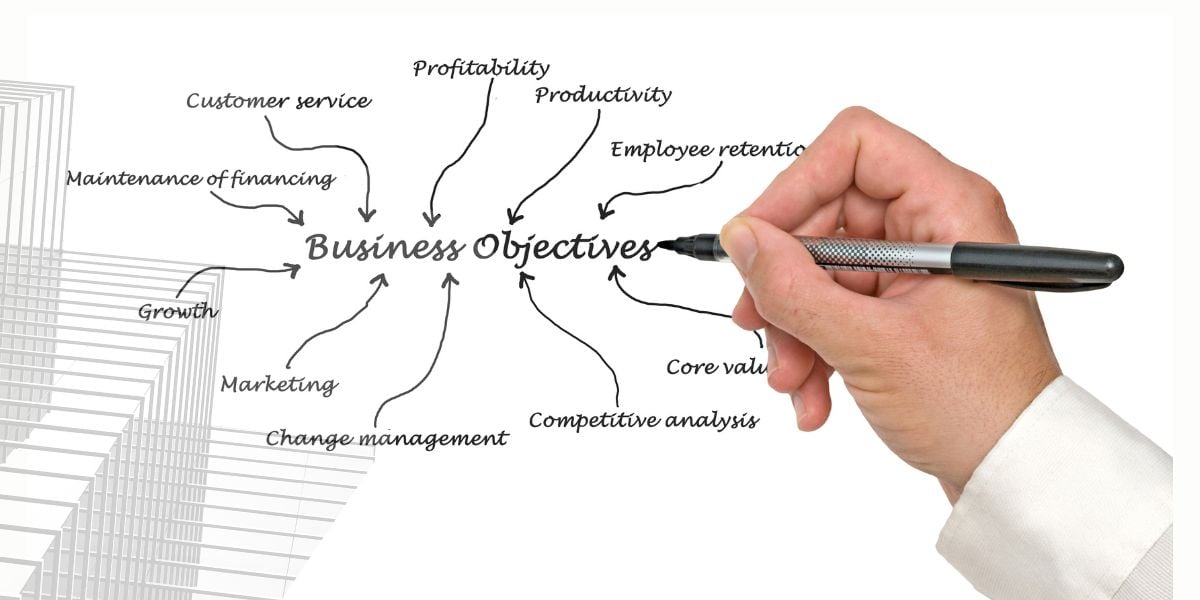
Successful businesses don't just happen; they result from careful planning and strategic execution. At the center of all this planning and execution lies the alignment of business objectives with strategy - the true compass to any firm's success.
Why Alignment Matters
Alignment - the simple concept of having all elements pulling in the same direction - is essential in business. It means all activities align perfectly with the organization’s strategic goals and objectives. Think of it like rowing a boat; it's only when all rowers paddle in sync and in the right direction that the boat moves forward effectively.
Similarly, when your business objectives are in harmony with your strategy, you have ensured that every step taken leads your business closer to its goals.
How to Align Business Objectives with Strategy
Now that we understand the importance and benefits, let’s look at the steps to align your business objectives with your strategy:
❶ Alignment from the Top Down: It starts with senior leadership. They need to communicate strategic objectives clearly and consistently to all departments.
Bridging the Gap between Strategy and Execution: It's critical to translate strategic objectives into operation-level realities. Identify and set key performance indicators (KPIs) that line up with your goals.
❷ Involve Employees in Strategic Planning: Involve your team in the planning process. This promotes understanding and ownership of business objectives, translating into better commitment to strategy execution.
❸ Monitoring and Adjusting: Regular reviews of the progress towards achieving the strategic objectives should be conducted. This enables the business to adjust and realign its strategies as necessary.
Strong alignment between objectives and strategy is not a one-time activity but a continuous process that requires regular reviewing and adjusting. With time and honest effort, you will create an organization where strategy and objectives are not disconnected entities but a harmonious blend propelling you towards success.
By aligning your strategies with your objectives, you are effectively charting a focused path to accomplish your goals. This alignment acts as the corner stone that paves the way for the success of your firm, guiding each step towards the shared vision.
The Direct Influence on Accomplishing Objectives
When business objectives and the overarching strategy are aligned, several benefits come into play that directly influence the attainment of these objectives:
◽ Efficiency: Alignment eliminates wasted effort. Everyone in the organization knows the broader strategy, ensuring that their work directly contributes to achieving business objectives.
Let's take a pizza shop as an example. Assume that the strategic goal is to become the fastest pizza delivery service in town. If everyone in the organization is aware of this, then all strategies will aim towards this.
The team preparing the pizzas will fine-tune their process to prepare pizzas more quickly. The delivery team will find the fastest routes for delivery, and customer service will take orders swiftly and accurately. This alignment eliminates any effort not directed towards the main goal, making the entire process super efficient.
◽ Motivation: When employees are aligned with the strategy, they have a clear understanding of how their efforts contribute to achieving the goals. This increases motivation and commitment.
Consider a software company aiming to produce an innovative mobile app. If the team understands that their goal is not just coding, but creating a tech solution that could potentially change how users interact with mobile apps, they’ll be more motivated. They know their coding and design work contributes towards a game-changing goal, thereby increasing their commitment and drive.
◽ Communication: Alignment facilitates better communication across all categories of employees – they are all speaking the same language, driven by the same strategic goals.
Imagine a sports goods manufacturing company aiming to be the leading supplier for professional athletes. If everyone within the company - from design and production to marketing and sales - understand this common objective, they all will communicate in the same strategic language. For instance, when a designer talks about product features, production understands it's to meet athletes' high-quality demands, not just general customers.
◽ Performance Tracking: Strategy alignment assists in tracking performance. Companies can measure their progress towards strategic goals and take corrective actions if necessary.
A digital marketing firm’s strategic goal might be improving client website SEO rankings. With this common alignment, they can track their performance by monitoring the improvement in rank of their client's websites. If they notice that certain strategies aren’t contributing to the target, they can take corrective actions like tweaking the SEO strategy or employing new SEO trends.
Key Components: Elements to Include for a Comprehensive Strategy
To develop a solid business plan, there are certain key components you should include. Start with an executive summary, giving a concise overview of your business concept. Follow it with a detailed description of your products or services, target market, and competitive analysis. In addition to provide an organizational structure, marketing and sales strategies, and financial projections.
⏹️ Executive Summary: Imagine you're starting an online green gardening business. Your executive summary might highlight your mission to enable city dwellers to grow their own organic produce easily, discussing your robust online platform that not only sells gardening supplies but also offers niche expertise and personalized guidance for each customer.
⏹️ Products or Services Description: For the same business, you would detail your offerings. For instance, you could offer eco-friendly gardening kits, organic seeds and soils, DIY gardening tutorials, and also provide a community platform for users to share their progress and help each other.
⏹️ Target Market: Here, you'd describe your ideal customer - the city dweller who's conscious about their health and food source, interested in gardening but constrained by lack of space and guidance. You're targeting urban ‘green thumbs,' who also value community-building and peer learning.
⏹️ Competitive Analysis: For your online gardening business, you’d assess both direct and indirect competitors. This might include other online gardening supply stores, as well as physical gardening stores, general e-commerce platforms selling gardening products, and even organic vegetable service providers.
⏹️ Organizational Structure: This would outline your team and their roles. For example, an operations manager to handle supply chain, a digital marketing expert to carry out promotional activities, a customer service manager to build and maintain customer relationships, and horticulture specialists to provide gardening guidance and generate content for your community.
⏹️ Marketing and Sales Strategies: Here, you’d provide a blueprint on reaching your target market. You might identify social media promotion, partnerships with green influencers, email marketing, and content marketing (through your user community and regular gardening tips and tricks) as key marketing strategies. Sales could be direct-to-consumer through your website.
⏹️ Financial Projections: This section predicts the financial performance of your business. You could estimate sales based on the size of your target market and the price of your offerings, predict necessary expenditures such as inventory and marketing costs, and project cash flow and profitability over the next few years.
Market Analysis: Understanding Your Target Audience and Competitors
Before diving into the depths of business planning, conduct a thorough market analysis. Identify your target audience and understand their needs, preferences, and purchasing habits. Analyze your competitors to determine their strengths, weaknesses, and unique selling propositions. This insight will help you position your business effectively and stand out in a crowded market.
Understanding Your Target Audience
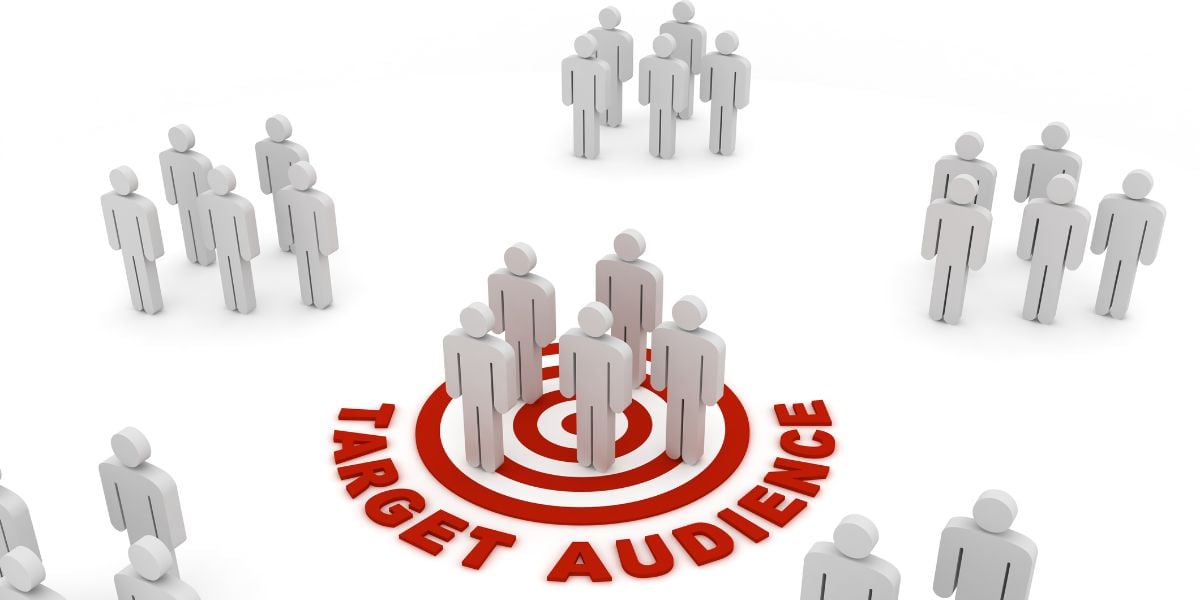
Identify Your Audience: Determine who your ideal customer is. This could be based on factors like age, gender, income, profession, location, etc. For instance, if you're selling high-end yoga gear, your target audience might be professional women between 25-45 who are health-conscious and have a high disposable income.
a. Understand Their Needs: Research your audience's needs using surveys, social media listening tools, or direct interviews. From the same example, you could find out what exactly do they look for in yoga gear - comfort, durability, eco-friendliness, or stylish design.
b. Know Their Preferences: Understand your audience's preferences. Do they prefer online shopping? What are their favored social media platforms? This will help create your marketing strategy.
c. Decode Their Purchasing Habits: Find out how often they are likely to purchase your product, how much they're willing to spend, what triggers their purchase decisions, etc. This data will help in pricing your product and predicting sales.
Analyzing Your Competitors
a. Identify Your Competitors: Know who are your direct and indirect competitors. Direct competitors are businesses that offer the same product or solution for the same need. Indirect competitors are those who offer different products or solutions but target the same needs or audiences.
b. Analyze Their Strengths and Weaknesses: Understand where they excel and where they fall short. This could be in terms of product quality, brand reputation, customer service, or marketing strategies.
c. Identify Their Unique Selling Propositions (USPs): Figure out what makes them stand out. It could be a particular product feature, their marketing approach, or their pricing strategy.
d. Learn from Their Strategies: Good or bad, there’s a lesson in every move your competitors make. Whether it’s a successful marketing campaign, a new product launch, or a customer service mishap, observing your competitors can give you useful insights for your own business.
Financial Projections: Forecasting Revenue, Expenses, and Profits
Financial projections are crucial to understanding the viability of your business. Estimate your revenue streams, taking into account pricing, sales volume, and market demand.
Project your expenses, including fixed costs, variable costs, and overheads. Completely, calculate your profits by subtracting expenses from revenue. These projections will guide your financial planning and enable you to make informed decisions.
Let's break down conducting financial projections into these three key areas:
◼ Forecasting Revenue:
→Identifying Revenue Streams: Pinpoint all potential sources of income, such as sales of products/services, subscription fees, advertising revenue, etc.
→ Estimating Sales Volume: Based on your market research and the size of your target audience, estimate how many units of your product/service you can reasonably expect to sell in a specific period.
→ Pricing Your Offerings: Determine the selling price for your products/services grounded on costs, customer willingness-to-pay, and competitor pricing.
◼ Calculating Expenses: Identify Fixed Costs: These are costs that do not change irrespective of the volume of business activity, such as rent, salaries, insurance, etc.
→ Calculate Variable Costs: These costs change in direct proportion to the volume of your business, such as cost of raw materials, shipping, etc.
→ Overheads Evaluation: Overheads are ongoing costs that are not directly tied to a specific business activity but necessary for business operations, like utilities, office supplies, etc.
◼ Projecting Profits:
→ Calculate Gross Profit: Subtract the cost of goods sold (all costs related directly to product creation) from the total revenue.
→ Calculate Net Profit: Subtract all other expenses, including operating expenses, taxes, and interest, from the gross profit.
→ Profit Margin Analysis: A further necessary step is to calculate your profit margin (net profit divided by total revenue) to understand profitability better.
Competitive Analysis: Leveraging Your Unique Selling Proposition
To succeed in a competitive market, you need to differentiate yourself from competitors. Conduct a thorough competitive analysis to determine your unique selling proposition (USP). Identify what sets your business apart and how it will resonate with your target audience. Leverage your USP in your marketing and sales strategies for maximum impact.
Let's consider a practical example to illustrate this:
Suppose you're launching a new plant-based skincare brand. The beauty industry is highly competitive, but you have found your niche: Your brand strictly uses sustainably sourced, 100% natural, and vegan ingredients.
After conducting a competitive analysis, you've found that while there are other natural skincare brands in the market, very few focus entirely on plant-based and sustainably sourced ingredients.
So, your unique selling proposition (USP) becomes:
"100% plant-based, sustainable skincare that is gentle on your skin and our planet."
Execution Plan: Translating Strategy into Actionable Steps
With a solid strategy in place, it's time to develop an execution plan. Break down your goals into actionable steps and assign responsibilities to team members. Set measurable targets and establish timelines to keep everyone accountable. Regularly review your execution plan to ensure you're on track and make adjustments as needed.
Mastering Business Plan Strategies for Startups and Entrepreneurs
Constructing a strategic and well-thought-out business plan paves the path to success for any startup or entrepreneur in the general industry.
.jpg)
Taking the time to understand your market, audience, and competitors empowers you to make data-driven decisions and carve out a niche that not only differentiates you but resonates with your customers.
It's super important to spend time understanding who your customers are, what they like, and who you are competing against. This knowledge helps you make smart choices and find your special spot in the business world, a spot that is unique to you and appealing to your customers. Plus, having specific money goals and a plan to manage your costs gives you a clear picture of your business's financial health.
So to all the new startups and entrepreneurs, keep going, keep learning, keep adapting, and keep dreaming big. You have the power to make a difference. Having a good business plan is more than just a strategy. It's your story, your map, and your way to success. Keep dreaming and keep working hard.
Discover the Right Tools for Your Startup
Take our 2-minute quiz to find tools tailored to your specific needs and goals.
Take the QuizTakes only 2 minutes


