
Business Planning Definition: Guide For Business Starters
This article provides entrepreneurs and new business owners with a comprehensive understanding of business planning. It covers the definition, benefits, key components, step-by-step process, and tips for effective implementation.

Understanding the Business Planning Definition
Business planning involves figuring out what a business wants to achieve, how to get there, and what to do along the way. As a business starter, you should understand and implement effective business planning strategies. By comprehending the business planning definition, importance, and motivation, you are better equipped to create a well-rounded business plan that serves as a roadmap for success. Ensure your plan includes all the necessary elements discussed.
The Importance of Business Planning
Setting Goals and Objectives: Business planning enables entrepreneurs to establish clear goals and objectives for their venture. These goals act as milestones, providing a sense of direction and purpose.
Identifying Opportunities and Risks: Through careful market analysis and competitive research, business planning helps identify potential opportunities and risks. Entrepreneurs can leverage these insights to develop strategies to exploit opportunities while mitigating risks.
Resource Allocation: Effective business planning enables entrepreneurs to allocate resources efficiently. Whether it be financial, human, or physical resources, a well-defined plan ensures optimal utilization, reducing waste and increasing profitability.
Performance Measurement: Business planning facilitates regular monitoring and evaluation of the business's performance against predetermined targets. By tracking progress, entrepreneurs can identify areas that require improvement or adjustments.
Securing Financing: Business plans are crucial when seeking external funding, whether from banks, investors, or other financial institutions. A solid business plan demonstrates the entrepreneur's vision, credibility and potential return on investment to potential supporters.
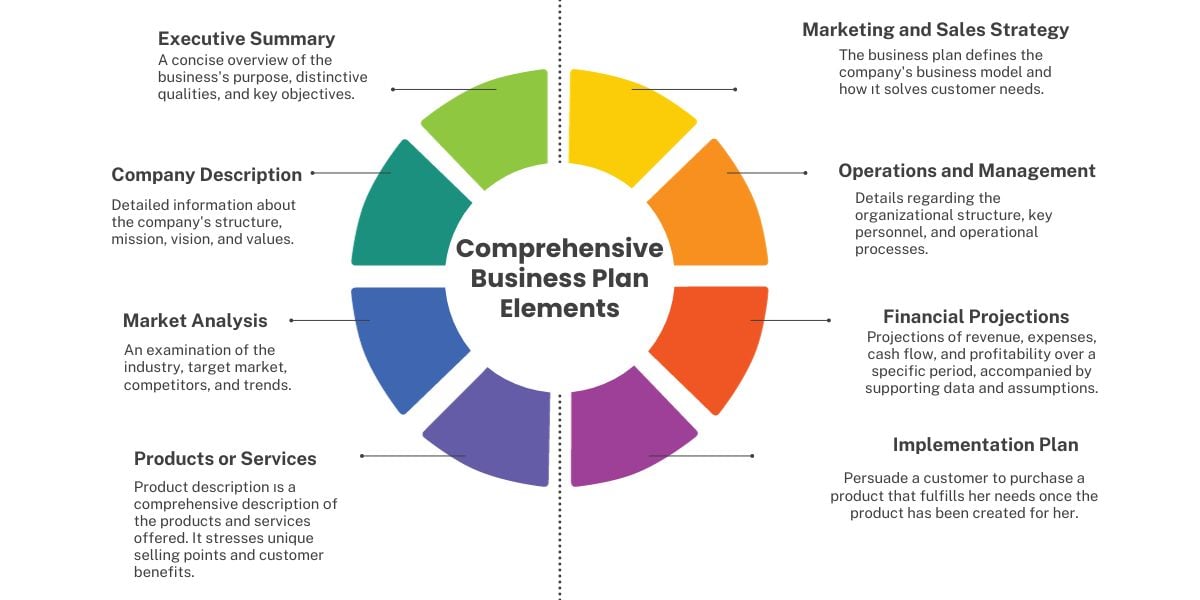
Elements of a Comprehensive Business Plan
a) Executive Summary: A concise overview of the business's purpose, distinctive qualities, and key objectives.
b) Company Description: Detailed information about the company's structure, mission, vision, and values.
c) Market Analysis: An examination of the industry, target market, competitors, and trends.
d) Products or Services: Product description is a comprehensive description of the products and services offered. It stresses unique selling points and customer benefits.
e) Marketing and Sales Strategy: The business plan defines the company's business model and how it solves customer needs.
f) Operations and Management: Details regarding the organizational structure, key personnel, and operational processes.
g) Financial Projections: Projections of revenue, expenses, cash flow, and profitability over a specific period, accompanied by supporting data and assumptions.
h) Implementation Plan: A timeline outlining the steps to bring the business plan to fruition. Also, resource and responsibilities allocation.
Motivation for Business Planning:
a) Enhancing Clarity and Focus: Business planning helps entrepreneurs create a sense of purpose and direction, as well as a clear vision.
b) Defining Strategies and Priorities: A well-planned business strategy helps entrepreneurs prioritize tasks and allocate resources effectively, resulting in increased efficiency and productivity.
c) Mitigating Uncertainty: The business plan is a document that helps business starters to be better prepared for the unexpected with contingency plans caused by challenges.
d) Gaining Stakeholder Support: The comprehensive business plan is essential for the entrepreneur because it increases the likelihood of gaining support from investors, lenders, and other stakeholders. The implementation of a business plan ultimately is a key factor in increasing your business's chances for success.
Purpose and Benefits of Business Planning
The primary purpose of business planning is to provide clarity and direction to the business. By articulating the objectives, strategies, and tactics, a business plan ensures that all stakeholders are aligned and working towards a common goal. In addition to business planning helps entrepreneurs evaluate the feasibility of their ideas and attract potential investors or partners.
One of the key benefits of business planning is that it forces entrepreneurs to think critically about their business concept. Consider the case of Jack, who wanted to start a gourmet popcorn shop. During the business planning process, he discovered that his target market preferred healthier snacks. Thus, he altered his concept to offer a range of flavored, organic popcorn, which ultimately led to greater success.
Tips for Effective Business Planning
To ensure your business planning efforts yield fruitful results, consider the following tips:
♦️ Research - Gather as much information as possible about your industry, target market, and competitors. This will help you make informed decisions and set realistic goals.
♦️ Be specific - Avoid vague statements or generic goals. Instead, be specific and measurable.
As example, instead of stating "increase sales," specify "increase sales by 15% within the first six months."
♦️ Continual revision - Business plans are not static documents. Regularly review and update your plan as your business evolves and new opportunities arise.
♦️ Seek feedback - Don't hesitate to ask for feedback on your business plan from trusted advisors, mentors, or professionals in your field. They can offer valuable insights and help you refine your approach.
Role of Business Planning in Securing Funding
Business planning plays a pivotal role in securing funding from potential investors or financial institutions. A well-structured business plan provides clarity and instills confidence in investors that their funds will be utilized effectively. It demonstrates the entrepreneur's commitment, ability to execute strategies, and understanding of the market.
Business planning is an essential tool for entrepreneurs and individuals starting a new business. It provides clarity, direction, and helps secure funding. By following the tips provided and going through the step-by-step process of creating a business plan, entrepreneurs can increase their chances of success.
Remember, the business planning process is an ongoing exercise that adapts to the evolving market. So, be proactive, refine your plan, and let business planning pave the way for your entrepreneurial journey.
Overcoming Challenges and Misconceptions
While business planning offers immense benefits, there are potential challenges and misconceptions to address. Common challenges include uncertainty in the business environment, changing market dynamics, and limited resources. Entrepreneurs must overcome these obstacles through continuous monitoring, adaptation, and seeking expert guidance.
Define your goals and objectives clearly: One of the biggest challenges in business planning is setting vague or unrealistic goals. Take time to understand what you want to achieve and establish specific and measurable objectives. This will enable you to create a well-structured and focused business plan.
Conduct thorough research: It is important to gather all the necessary information before creating a business plan. Understanding your target market, industry trends, competition, and potential risks will help you make informed decisions and mitigate challenges in the planning process.
Seek feedback and guidance: Sometimes, misconceptions arise from having a limited perspective. Engage with mentors, advisors, industry experts, or even potential customers to get their input on your business plan. Their feedback can offer valuable insights that help you address any misunderstandings or challenges in your planning.
Be flexible and adaptable: Effective business planning requires flexibility. Circumstances may change, unexpected challenges can arise, or new opportunities may emerge. Build flexibility into your plan, so you can pivot and adapt when needed. Embracing change and being open to new ideas will help you overcome misconceptions that could limit your business's success.
Continuously monitor and analyze: Just creating a business plan is not enough. Regularly monitor your progress, track key performance indicators, and analyze the results. By doing so, you can identify any misconceptions or challenges early on, and make necessary adjustments to keep your business on track towards success. Regular review and monitoring ensure that your planning remains relevant and effective.

Practical Tips for Creating and Implementing an Effective Business Plan
To create an effective, industry-tailored business plan, entrepreneurs should consider the following tips:
✅ Conduct thorough market research and competitor analysis: It is essential that you understand the current market trends, consumer preferences, and behavior to conduct thorough research and analyze competitors' strategies. Then you can identify opportunities, assess market demand, and develop strategies to gain a competitive advantage.
✅ Seek input from industry experts or mentors: Experienced industry experts or mentors can provide valuable insights and guidance. They can offer advice on industry-specific challenges, provide feedback on the business plan, and help entrepreneurs avoid common pitfalls. Their expertise and network can be instrumental in refining and improving the business plan.
✅ Regularly review and update the business plan as market conditions evolve: As time goes by, the market changes quickly. That's why it's important to check a business plan regularly and make changes to keep up with these changes. By keeping up to date with what's happening in the business world, including trends and what customers like, it helps entrepreneurs make changes to their plan and goals. This way, they can keep the business successful.
✅ Seek feedback from trusted advisors to refine the plan: Seek input from trusted advisors to refine the plan. We're trying to get business planners to have experts look at them and give advice. It's important to listen to them, because they know a lot about business. They can help you make your business plan better and more effective.
✅ Communicate the plan effectively to stakeholders, employees, and investors: It is important to be clear when you are explaining about how something works. Clear, concise communication ensures that all parties understand the objectives of your business plan, strategies, and expected outcomes. This can help you build trust and secure funding to further your goals.
Business planning is an indispensable tool for entrepreneurs embarking on the journey of starting a new business. By understanding the definition and importance of business planning, entrepreneurs can make informed decisions, set achievable goals, attract investors, and position themselves for long-term success.
It ensures that entrepreneurs have a roadmap to follow, guiding them through each step of their journey. It helps them stay organized and focused on their objectives, preventing them from getting lost or making unnecessary detours along the way.
Furthermore, having a well-developed business plan increases the likelihood of obtaining funding from investors or financial institutions. If you want to get money for your small business or a mortgage, you should have a plan that shows that you know what you're doing.
Moreover, business planning enables entrepreneurs to efficiently manage their resources, including time, money, and manpower. By anticipating potential challenges and developing contingency plans, entrepreneurs can effectively allocate their resources, ensuring that they are used effectively and efficiently.

Additionally, a business plan serves as a valuable tool for tracking progress towards goals. Entrepreneurs can compare actual results against projected milestones, identify areas needing improvement, and make informed adjustments to their strategies. This continuous monitoring and evaluation allow entrepreneurs to stay on track and make necessary adaptations to ensure long-term success.
Ultimately, business planning is not just a one-time task but an ongoing process. It allows entrepreneurs to stay proactive, seize opportunities, and navigate challenges in the ever-changing business landscape. Whether it's attracting investors, managing resources, or tracking progress, a well-crafted business plan is essential for the success of any new venture.
Discover the Right Tools for Your Startup
Take our 2-minute quiz to find tools tailored to your specific needs and goals.
Take the QuizTakes only 2 minutes


