
Marketing Mix Strategies for Startups in All Industries
Learn how to implement an effective marketing mix strategy for startup success in general industries. This comprehensive guide explores the importance of marketing mix for startups in general industries and provides practical strategies for implementing an effective marketing mix strategy. From product development to pricing, distribution, and promotion, learn how to position your startup for long-term success.

In today's hyper-competitive business landscape, startup entrepreneurs encounter various obstacles in establishing a strong position in their industries. One crucial aspect that can make or break their success is a well-defined marketing mix strategy.
By optimizing the components of product, price, place, and promotion, startups can drive business growth and stand out among their competitors. In this guide, we'll talk about something called the "marketing mix" and why it's so important for startups in different industries. We'll also give you practical tips and ideas to help you create a successful marketing mix strategy.
Understanding the Marketing Mix
The marketing mix, often referred to as the 4Ps, is a framework that helps businesses make strategic decisions regarding their products or services. Each component plays a vital role in shaping a startup's marketing strategy.
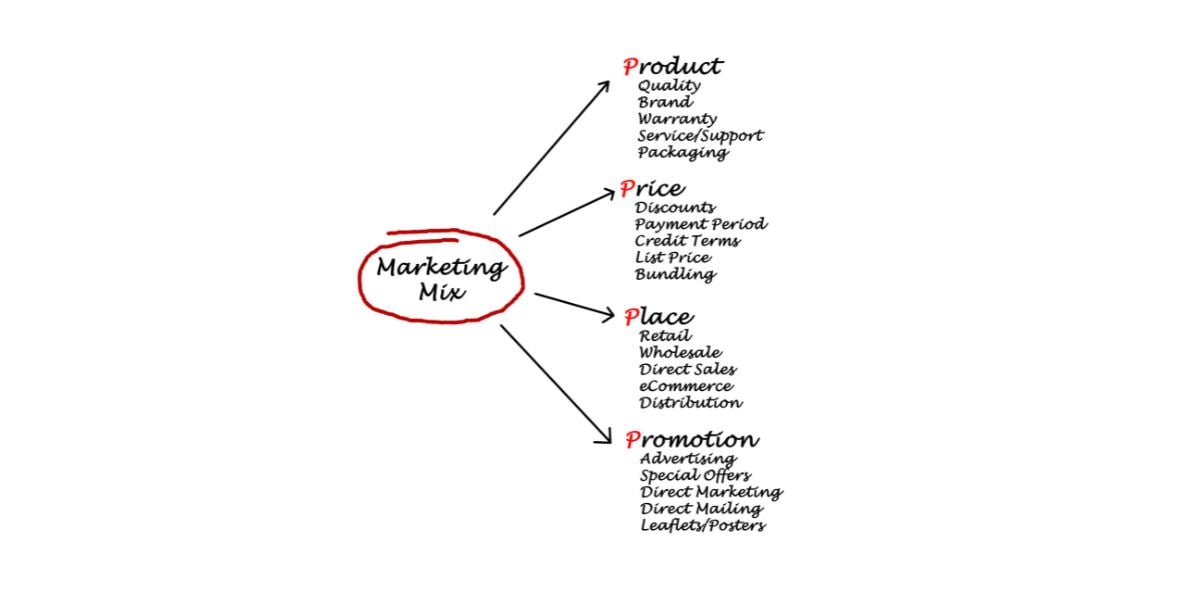
The first component of the marketing mix is the product or service itself. Startups should focus on offering a unique value proposition that addresses their target market's needs and demands. This section will elaborate on the importance of product differentiation, highlighting the need for startups to understand their customers' pain points and develop innovative solutions.
🔹 Price
Pricing strategies can significantly impact a startup's market positioning and profitability. Startups must carefully consider factors such as production costs, competition, and customer perception when setting prices. This section will provide practical tips on determining optimal pricing strategies that align with the startup's value proposition, target market, and overall business goals.
🔹 Place
The third component of the marketing mix emphasizes the importance of product placement or distribution channels. Startups need to identify the most effective and efficient ways to reach their target audience. This section will explore various distribution channels, such as direct sales, e-commerce platforms, retail partnerships, and more.
Real-life examples and case studies of startups successfully leveraging different distribution channels will be shared to inspire and guide entrepreneurs.
🔹 Promotion
Promotion is all about how a startup communicates its value to the people it wants to sell to. It includes different ways to spread the word like ads, social media, and working with popular influencers. In this section, we'll talk about how to choose the best ways to promote your startup based on your goals, the people you want to reach, and how much money you have to spend.
A Step-by-Step Guide to Implementing an Effective Marketing Mix Strategy
Implementing an effective marketing mix strategy is crucial for any business to achieve its marketing objectives.
If a business wants to do well with its marketing, it needs to have a good marketing plan. This plan is made up of four important parts: product, price, promotion, and place.
It is important to think carefully about each part of your marketing plan and how they fit together. If you do, you can make sure you're reaching the right customers, standing out from your competition, and doing the best you can.
Here's a step-by-step guide that will show you how to make a great marketing mix strategy:
🔹 Identify your target market:
Before implementing a marketing mix strategy, it is essential to identify and understand your target market. Conduct thorough market research to determine the demographics, needs, preferences, and behaviors of your potential customers. This step lays the foundation for all subsequent decisions in the marketing mix.
🔹 Define your product or service: Develop a clear understanding of your product or service offerings. Define the features, benefits, and unique selling propositions (USPs) that differentiate your offerings from competitors. Determine the positioning of your product or service in the market, targeting specific customer segments.
🔹 Determine your pricing strategy: Determine an appropriate pricing strategy that aligns with your target market and product positioning. Consider factors such as production costs, competitor pricing, perceived value, and customer affordability. Decide whether to adopt a cost-based, market-based, or value-based pricing approach and set competitive prices accordingly.
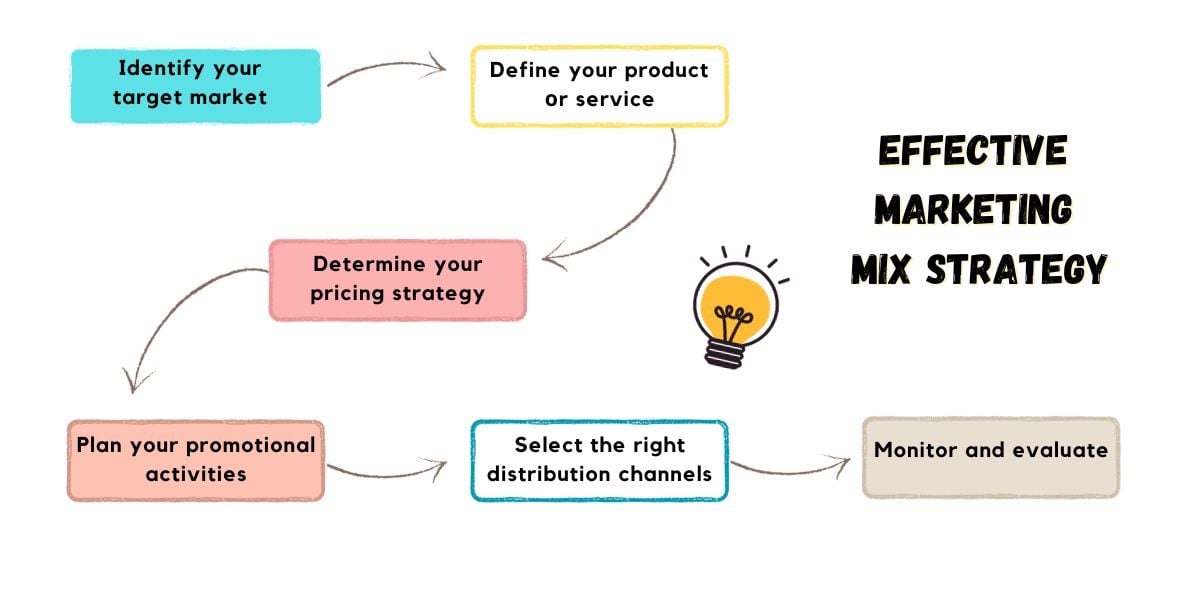
🔹 Plan your promotional activities: Create a comprehensive promotional plan to communicate and promote your offerings to the target market. Define the key messages, positioning, and branding elements to be used. Identify the most effective marketing channels, such as advertising, public relations, social media, and content marketing. Develop a content calendar and allocate the resources required for executing the promotional activities.
🔹 Select the right distribution channels: Choose the best ways to get your product or service to the people who want it. Think about what your customers like and what's convenient for them. You'll also need to think about what kind of product you have.
You can sell directly to customers online or through your own stores. Or, you can sell indirectly through stores, distributors, or wholesalers. Think about all these factors to decide the best way to reach your customers.
🔹 Monitor and evaluate: Regularly monitor and evaluate the performance of your marketing mix strategy. Track key performance indicators (KPIs) such as sales revenue, customer acquisition, customer satisfaction, and market share. Analyze the data collected to identify areas for improvement and make necessary adjustments to your strategy if needed.
Marketing Mix Strategies: Successful Entrepreneur Examples
Implementing an effective marketing mix strategy requires careful planning, research, and evaluation. Remember, the marketing mix is not a static formula, but a flexible tool that should be regularly reviewed and adjusted to stay aligned with changing market dynamics and consumer preferences.
1. Apple Inc.: Innovative Marketing Mix Strategies Leading to Success
Apple Inc. is known for its innovative marketing mix strategies that have propelled the company to great success. One of their key strategies is their product differentiation approach. Apple designs and markets premium, cutting-edge products that cater to consumers seeking high-quality and unique tech gadgets.
Apple makes more money and has a better brand image than other companies. They do it by advertising a lot, going to places like Walmart where people want to buy their phones, and using a pricing strategy called skimming.
Apple is great because they invest a lot in making powerful products that used to be a luxury. These kinds of products cost more than the ones other companies make. Apple is the best company ever made!

2. Nike: Effective Marketing Mix Strategies Propelling Growth
Nike is globally recognized for its effective marketing mix strategies that have contributed to its continuous growth. One of their key strategies is product innovation and superior quality. Nike invests heavily in research and development to create cutting-edge sporting goods and footwear that cater to athletes and sports enthusiasts.
They have a wide range of products targeting different customer segments, allowing them to meet various needs and preferences effectively. In terms of promotion, Nike leverages endorsements from high-profile athletes and celebrities, creating powerful advertising campaigns that resonate with their target audience. Nike also utilizes a diverse distribution network, including their own retail stores, online platforms, and partnerships with various sporting goods retailers worldwide. These strategic marketing mix decisions have propelled the exceptional growth and market dominance of Nike.
3. Coca-Cola: Successful Entrepreneurial Examples of Marketing Mix Strategies
Coca-Cola is an iconic brand known for its successful entrepreneurial marketing mix strategies. One of their key strategies is extensive brand building and marketing communication. Coca-Cola invests heavily in advertising campaigns that evoke emotions, create memorable experiences, and connect with consumers on a personal level.
They also engage in various sponsorship and partnership activities, such as sponsoring major sports events and collaborating with influential celebrities. Pricing is another important aspect of their marketing mix strategy. Coca-Cola utilizes various pricing strategies, including value-based pricing and penetration pricing, to appeal to a wide range of consumer segments.
Coca Cola company wants to make money from giving people drinks. The best way for them to make money is to give drinks to as many people as possible. They want their drinks to be popular even in places that aren't expensive, so they sell the drinks at gas stations and shops that sell food.
Coca-Cola's effective marketing mix decisions have contributed to their global success, making them one of the most recognizable and profitable beverage companies in the world.
The Power of Marketing Mix
Implementing marketing mix strategies can contribute to building a strong and lasting brand image. Consistency in messaging, visual identity, and customer experience across all marketing channels helps establish trust and loyalty among consumers and fosters brand recognition. This, in turn, can lead to increased customer retention, referrals, and positive brand association, ultimately driving business growth.
Moreover, marketing mix strategies provide entrepreneurs with a roadmap for continuous improvement and adaptation. It is important for business owners to pay attention to what customers want and to stay ahead of the other companies. If they don't, another company may take over their place in business because they will do better.
Applying marketing mix strategies empowers entrepreneurs and startups with a targeted, competitive, and resource-optimized approach to marketing. It enables them to build a strong brand image, achieve measurable results, and stay agile in an ever-changing market. By embracing these strategies, entrepreneurs can pave the way for sustainable growth and long-term success.
Discover the Right Tools for Your Startup
Take our 2-minute quiz to find tools tailored to your specific needs and goals.
Take the QuizTakes only 2 minutes


