
Customer Engagement: Strategies & Insights for Entrepreneurs
Gain actionable insights on customer engagement strategies for entrepreneurs. Learn how to build trust, loyalty, and satisfaction for your business.

Customer engagement is a critical aspect of any business, especially for entrepreneurs and individuals starting a new venture. It refers to the interactions and connections that businesses establish with their customers to build trust, loyalty, and satisfaction. In today's competitive market, understanding and implementing effective customer engagement strategies can significantly impact the success and growth of a business.
Understanding the Customer Journey
To engage customers effectively, entrepreneurs must first understand the customer journey – the entire process a customer goes through from becoming aware of a product or service to making a purchase and beyond. By mapping out this journey, entrepreneurs can identify the touchpoints where customer engagement is crucial and tailor their strategies accordingly.
During the awareness phase, businesses should focus on creating informative content, such as blog posts, social media updates, and videos, to capture the attention of potential customers. By offering valuable insights and positioning themselves as industry experts, entrepreneurs can establish credibility and begin building customer engagement.

As customers move into the consideration phase, businesses should provide personalized and interactive experiences. This can be achieved through live chat support, personalized emails, and interactive product demonstrations, which instill a sense of trust and differentiation.
Finally, during the purchase and post-purchase phases, businesses should ensure smooth transactions and provide exceptional customer service. By promptly resolving issues and addressing customer concerns, entrepreneurs can foster customer loyalty and advocacy.
What is Customer Engagement?
Customer Engagement, a buzzword that's frequently thrown around in business conversations and a key element that empowers a business's sustainability and growth. But, what exactly does it entail?
In the broadest sense, customer engagement is the ongoing interactions between a business and its customers. This multi-dimensional process goes beyond transactions; it encompasses all the experiences, emotions, and interactions that shape the customer's perception of a brand. From reading a blog post to chatting with customer support, or sharing feedback, each point of interaction between a customer and your business contributes to the level of customer engagement.
Importantly, customer engagement isn't a one-size-fits-all concept. It varies across different industries, target markets, and product or service offerings.
Why is Customer Engagement Important?
Customer engagement holds the key to business success for several reasons:
- Loyalty and Retention: Engaged customers are loyal customers. They are more likely to stay with your brand, repeat purchases, and refer others.
- Revenue Growth: Higher engagement often leads to higher customer spend. For instance, an engaged customer might decide to purchase the premium version of your product after being satisfied with the base model.
- Brand Advocacy: Engaged customers not only buy your product, but they also become ambassadors for your brand, spreading positive word-of-mouth and influencing others.

When Customer Engagement Meets Market Research
Let's consider an example. Suppose you're a health food startup targeting health-conscious millennials. You've conducted extensive market research and created a business plan.
Here's how you might weave customer engagement into your strategy: You identify that your target audience is active on Instagram, appreciates quick and easy recipes, and values sustainability. You decide to launch an IGTV series featuring five-minute recipes using your product.
You also share behind-the-scenes content about your sustainable practices and engage with your followers by responding to comments, holding live Q&A sessions, etc.
Your audience not only starts to appreciate your product but begin to align with your brand values, thereby boosting customer engagement.
The Business Plan Equation
When considering how to make a business plan, keep in mind that customer engagement should play a central role in your strategy. An ideal business plan integrates market analysis, company description, and target customer information to create a comprehensive approach to customer engagement. It is essential not to treat customer engagement as an afterthought but as a core component of your plan.
Customer engagement is about building relationships with your customers that translate into long-term loyalty and growth. As the driving force behind successful businesses, it's an aspect that requires continuous attention and innovation.
Incorporating robust customer engagement strategies, enriched by your market analysisand knowledge of your target customers, will surely pave a promising path for your business. By focusing on customer engagement and aligning every aspect of your business plan accordingly, you'll be well on your way to sculpting a thriving business that's cherished by its clientele.
Building Effective Customer Engagement Strategies
Now that we understand the customer journey, let us delve into the strategies to build effective customer engagement.
1. Create a Strong Online Presence:
A well-designed website, active social media profiles, and online reviews can significantly impact customer engagement. Ensure that your website is visually appealing, user-friendly, and optimized for mobile devices. Regularly update your social media profiles with engaging content and respond promptly to customer comments and inquiries. Positive online reviews from satisfied customers can enhance credibility and stimulate customer engagement.
2. Personalize Interactions:
Customers appreciate personalized experiences. Collect customer data (with their consent) to segment your audience and deliver tailored messages and offers. Personalization can extend to emails, product recommendations, and customized landing pages, which make customers feel valued and understood.
3. Encourage Customer Feedback:
Actively seek customer feedback to improve your products, services, and overall customer experience. Provide multiple channels for customers to voice their opinions, such as surveys, feedback forms, and social media polls. When customers see that their feedback is valued and acted upon, they are more likely to engage with your business.
4. Implement Effective Customer Relationship Management (CRM) Systems:
Utilize CRM systems to manage and analyze customer data efficiently. This helps entrepreneurs segment their customer base, track customer interactions, and identify patterns and trends. These insights can be used to create personalized experiences and anticipate customer needs.
Measuring and Improving Customer Engagement
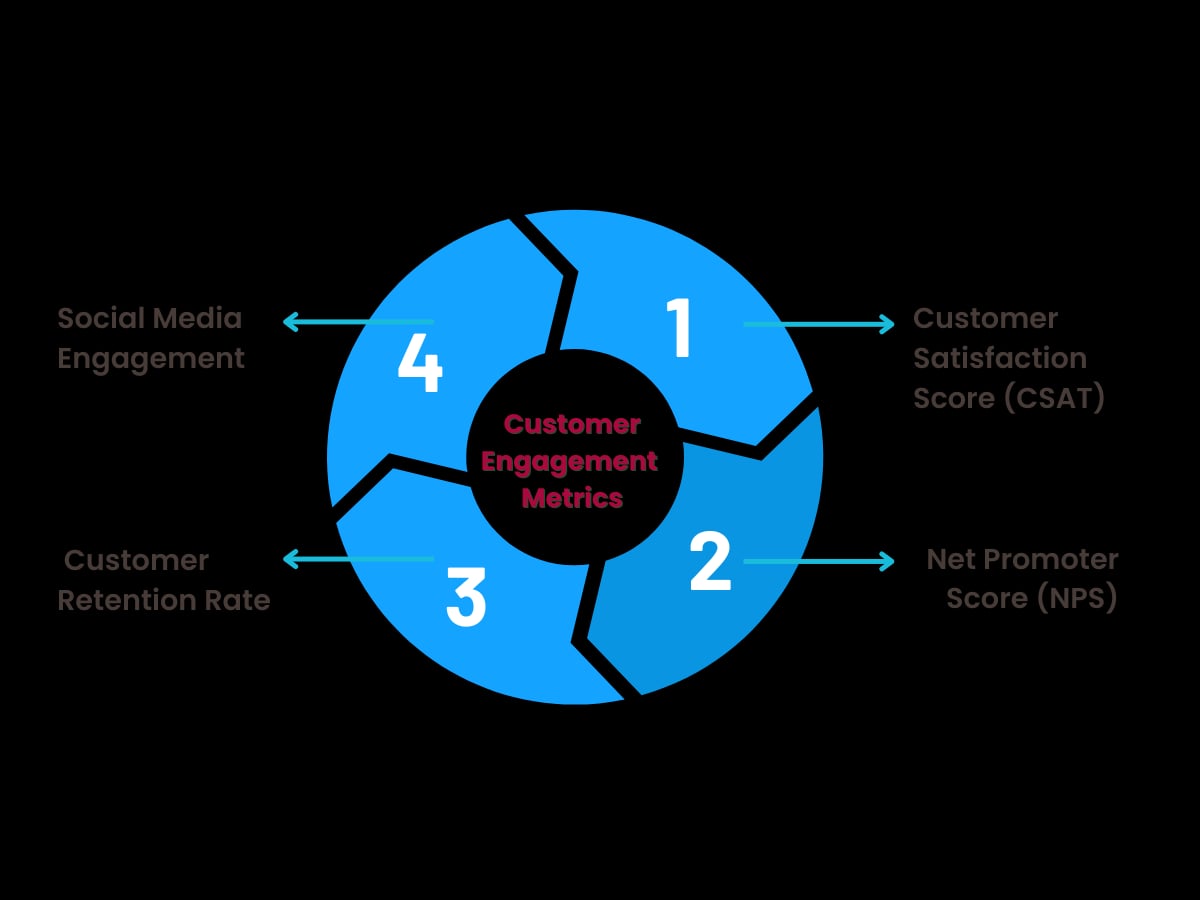
It is essential to measure customer engagement to evaluate the effectiveness of your strategies and make informed improvements. Here are some key metrics to consider:
1. Customer Satisfaction Score (CSAT): This metric measures customer satisfaction with your product or service. It is typically measured through surveys or feedback forms. A high CSAT indicates that customers are engaged and likely to continue doing business with you.
2. Net Promoter Score (NPS): NPS measures customer loyalty and willingness to recommend your business to others. By understanding your NPS, you can identify customers who are advocates and leverage their engagement to attract new customers.
3. Customer Retention Rate: This metric measures the percentage of customers who continue to do business with you over a specific period. A high retention rate indicates strong customer engagement and loyalty.
4. Social Media Engagement: Monitor metrics such as likes, comments, and shares to assess the level of engagement and interest your content generates on social media platforms.
To improve customer engagement, consider the following strategies:
✔️Continuously Review and Analyze Data:
Regularly analyze customer data to identify areas for improvement and refine your customer engagement strategies. Pay attention to customer feedback, review patterns, and trends to adapt and enhance your approach.
✔️ Offer Incentives and Rewards:
Implement loyalty programs, exclusive offers, and referral programs to reward and incentivize customer engagement. These initiatives not only retain existing customers but also encourage them to advocate for your business.
✔️ Engage with Customers:
Actively engage with your customers through various channels, including social media, email newsletters, and blog comments. Respond to inquiries, address concerns, and participate in conversations related to your industry. By being accessible and engaged, you can build trust and foster stronger relationships.
✔️ Continuously Improve User Experience:
Ensure that your website, mobile app, and other customer touchpoints are intuitive, user-friendly, and visually appealing. Regularly conduct usability testing, gather feedback, and optimize your digital platforms to provide a seamless user experience.
Nurturing Customer Engagement: The Last Resort in Business Blueprint
Customer engagement is an indispensable catalyst that fuels a successful business. Its importance is amplified in today's expansive and intricate business tapestry – a living testament to the profound impact of ethos in everyday entrepreneurship to let the relationship with customers thrive. It's a transformative journey that starts from getting to know your customers to building lasting impressions, based on trust, loyalty, and embedded value.
Understanding the customer journey, the key elements of their navigation through awareness, consideration, purchase, or even beyond, primes the effective creation of customer engagement strategy. By customizing the user experience through each phase, based on the unique drivers of your customer, a compelling east-to-west map of your customer's journey can be deciphered.
Continuous improvement of customer engagement cannot be overstated. It is a dynamic cycle of implanting intentional strategies, evaluating their effectiveness, and fine-tuning them in line with the business's pulse and customer sentiment. In the same light, improving your customer engagement is akin to enhancing your lens for your customer's outlook – their needs, preferences, and expectations.
Competitive analysis, often a crucial part of the business planning format, aids in gauging your position in the market and assessing the level of customer engagement compared to businesses in your niche. This invaluable perspective allows you to create a tailored marketing strategy that resonates with your targeted clientele.
As the business landscape continues to evolve and customer expectations shift, entrepreneurs must remain devoted to their commitment to adapt and mold their strategies. Acknowledging the emergent patterns in your customer engagement data could be an impetus for innovation, leading to research and development endeavors that maintain your competitive edge.
Taking into consideration the relevance of intellectual property, it could serve as a sound basis for differentiating your services or products, enhancing customer engagement in the process. Intellectual properties, be it patents, trade secrets, or copyrights, can fuel customer engagement by offering something unique, valuable, and solely associated with your brand.
Remember, customer engagement is not a destination but a constantly evolving journey. As an entrepreneur, navigating through this journey requires adaptability, resilience and commitment to innovation, staying true to meeting your customer's needs, driving an impactful marketing strategy, and staying relevant. In the grand enterprise of entrepreneurship, fostering an environment that encourages customer engagement can be the game-changing strategy that will steer your business towards success.
Discover the Right Tools for Your Startup
Take our 2-minute quiz to find tools tailored to your specific needs and goals.
Take the QuizTakes only 2 minutes


