
Demystifying Sales Tax: Entrepreneurs Comprehensive Guide
Navigate the complex world of sales tax with our comprehensive guide designed for entrepreneurs. Learn about varying rates, jurisdiction rules, and practical tips for compliance.

Starting a new business venture is an exhilarating journey filled with dreams of success and growth. However, amidst the excitement, it's essential to lay a strong foundation for your business, and that includes understanding sales tax. Sales tax is a vital component of your business's financial landscape, and comprehending its intricacies can save you from potential pitfalls and ensure you stay on the right side of the law.
In this comprehensive guide, we will explore sales tax rates, state sales tax laws, the utility of sales tax calculators, sales tax nexus, online sales tax, local sales tax, and achieving sales tax compliance. So, let's dive in and equip you with the knowledge you need to succeed.
Understanding Sales Tax Rates: A Comprehensive Overview and How-to
Sales tax rates can differ significantly based on your location. While some states have a consistent sales tax rate, others permit local jurisdictions to implement additional taxes, leading to variations even within a single state. It's vital for entrepreneurs to conduct thorough market research and comprehend the sales tax rates relevant to their region. This understanding directly influences your marketing strategy, pricing approach, and financial planning.
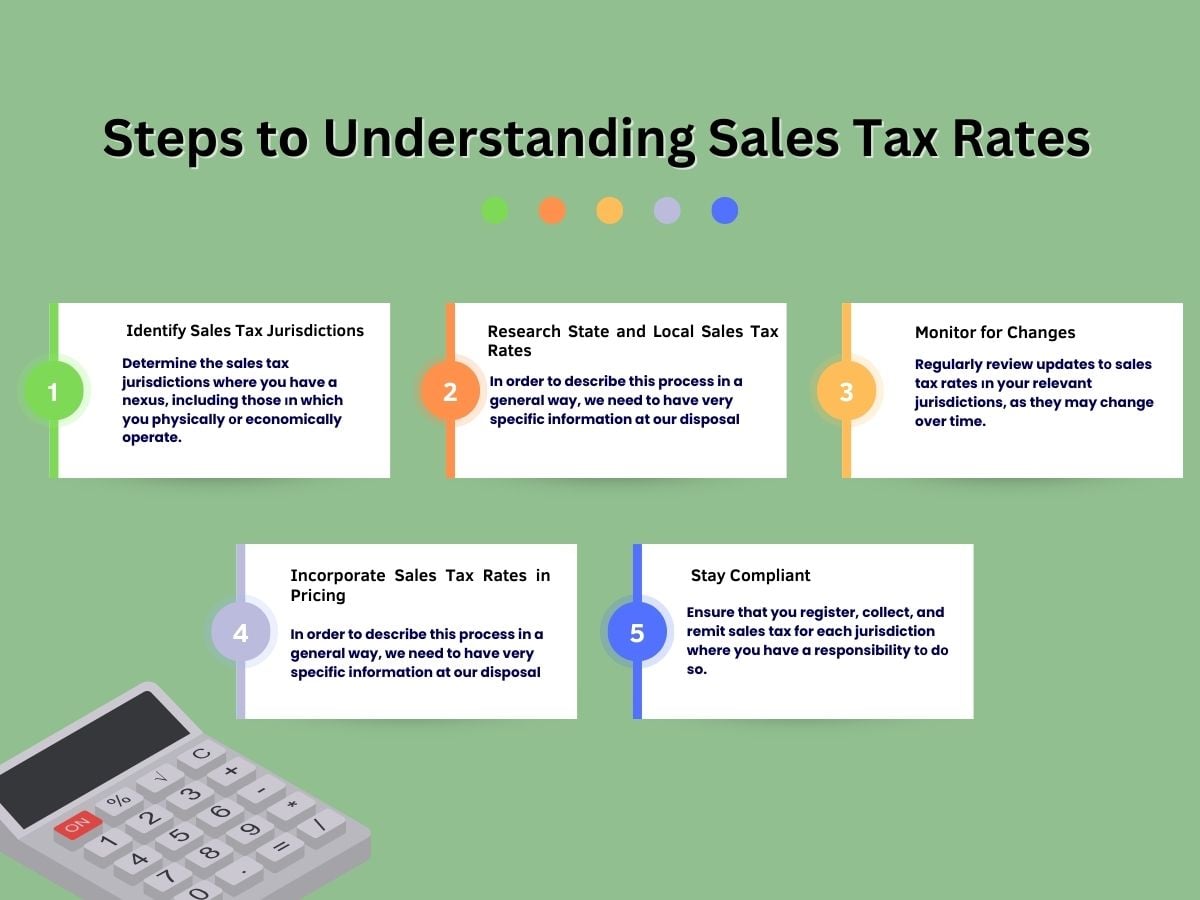
Steps to Understanding Sales Tax Rates:
☑ Identify Sales Tax Jurisdictions:
Determine the sales tax jurisdictions where you have a nexus, including those in which you physically or economically operate.
☑ Research State and Local Sales Tax Rates:
Identify the state level sales tax rates, as well as any additional local sales tax rates, for each jurisdiction where you conduct business.
☑ Monitor for Changes:
Regularly review updates to sales tax rates in your relevant jurisdictions, as they may change over time.
☑ Incorporate Sales Tax Rates in Pricing:
Reflect the combined state and local sales tax rates in your pricing model to ensure an accurate sales price for your customers.
☑ Stay Compliant:
Ensure that you register, collect, and remit sales tax for each jurisdiction where you have a responsibility to do so.
Practical Example:
Suppose you operate an e-commerce store based in a state with a 6% state sales tax rate. However, your business serves customers throughout the state, and certain localities within the state impose an additional 2% local sales tax. To ensure accurate pricing and compliance, you must calculate sales tax at a total rate of 8% for customers in those specific areas.
Understanding and incorporating the applicable sales tax rates into your marketing strategy and pricing model, your business can maintain compliance and operate efficiently in the ever-changing world of sales tax.
Sales tax rates can vary significantly depending on your location. While some states have a single, uniform sales tax rate that applies statewide, others allow local jurisdictions to impose additional taxes, leading to variations within the same state. For entrepreneurs, it's crucial to research and understand the applicable sales tax rates for your area. This knowledge will directly impact your pricing strategy and financial planning.
Navigating State Sales Tax Laws
Each state in the U.S. has its own set of state sales tax laws and regulations. Understanding these laws is critical to ensure you're collecting the right amount of tax from your customers and remitting it to the state's revenue department. Most states require businesses to obtain a sales tax permit, which is essentially permission to collect sales tax.
Practical Example:
If you plan to sell handmade jewelry online and your business is based in California, you'll need to register for a California sales tax permit. This process involves completing an application, providing business details, and waiting for approval. Once approved, you can start collecting sales tax from California customers.
Utilizing a Sales Tax Calculator
Calculating sales tax manually can be complex, especially when you're dealing with various tax rates or selling across multiple states. Fortunately, there are online tools and sales tax calculators available to simplify the process. These calculators can help you determine the correct amount of sales tax to collect from each customer based on their location.
Practical Example:
Let's say you run a subscription box service that ships gourmet snacks nationwide. By using a sales tax calculator, you can easily identify the appropriate sales tax rate for each customer's state and charge accordingly. This ensures accuracy and compliance without the need for manual calculations.
Determining Sales Tax Nexus
Sales tax nexus refers to the connection between your business and a state that requires you to collect and remit sales tax in that state. Nexus can be established through various activities, such as having a physical presence (e.g., a brick-and-mortar store or warehouse) or significant sales volume within a state. Understanding when and where you have nexus is vital for compliance.
Practical Example:
Imagine you operate an online bookstore based in Ohio but have customers all over the country. If your business stores inventory in a warehouse in Texas, you may establish nexus in Texas, requiring you to collect and remit Texas sales tax on orders shipped to Texas addresses.
Managing Online Sales Tax
With the rise of e-commerce, online sales tax has become a hot topic. It's essential for entrepreneurs engaged in online sales to navigate the complex world of digital taxation. This includes understanding the rules for collecting sales tax in states where you have nexus due to online sales.
Practical Example:
If you run a software-as-a-service (SaaS) company and offer subscriptions to customers across multiple states, you'll need to determine whether your services are subject to sales tax in each of those states. Some states tax digital products and services, while others don't.
Addressing Local Sales Tax
Local sales tax is an additional layer of complexity. In some states, local jurisdictions, such as cities and counties, can impose their own local sales tax rates on top of the state rate. This means you might need to keep track of multiple tax rates within a single state.
Practical Example:
Suppose you operate a food truck in Florida. In addition to Florida's state sales tax rate, you may need to consider the local sales tax rates of the various cities or counties where you set up your food truck. Each location might have a different local tax rate.
Ensuring Sales Tax Compliance
Ensuring sales tax compliance is crucial to avoid penalties and legal issues. Compliance includes registering for sales tax permits, accurately collecting and documenting sales tax, filing regular sales tax returns, and remitting the collected taxes to the appropriate tax authorities on time.
Practical Example:
Let's say you're a small bakery owner in Illinois. You've registered for a sales tax permit and have been diligently collecting and tracking sales tax on your products. To remain compliant, you must file your sales tax return with the Illinois Department of Revenue as required, usually on a monthly, quarterly, or annual basis.
Now that you have a better understanding of sales tax, you can incorporate this knowledge into your marketing strategy and business planning format. Remember that failing to comply with sales tax laws can result in costly consequences for your business.
Sales Tax vs. VAT: Key Elements for a Business Planning Format
To ensure smooth and lawful operations, entrepreneurs need to grasp the intricacies of taxes, particularly Sales Tax and Value-Added Tax (VAT). Recognizing the nuances of these indirect taxes is crucial for successful business planning.
Sales Tax is imposed on the sale of goods and certain services and is collected at the point of sale. The collected tax amount is passed onto the relevant tax authority.
VAT, in contrast, applies to each stage of production and distribution. Businesses collect VAT at each point in the chain, from raw materials to end consumers.
The approach to pricing varies between Sales Tax and VAT. While Sales Tax is transparently added at the final sale point, VAT is embedded in the price of goods or services at every stage.
Record-keeping and compliance take different forms for the two taxes. VAT requires meticulous documentation as businesses can claim credit for VAT paid on inputs. Businesses act as tax collectors, offsetting VAT charged to customers against VAT paid. Sales Tax, meanwhile, focuses on collecting tax at the sale point, registering and remitting taxes timeously.
Understanding these differences has practical implications for businesses, particularly those considering international expansion. An effective business planning format needs to incorporate these taxes' distinct attributes to assess potential impacts on the bottom line.
Although Sales Tax and VAT have the same goal—to tax consumption—each does so differently. Recognizing these differences aids financial and tax compliance, ensuring your business runs smoothly. As your business innovates and expands geographically, staying informed about Sales Tax and VAT will bolster its growth and success.
Surviving Sales Tax Audits: A Handy Guide for Businesses
Sales tax audits can feel overwhelming. However, with the right knowledge and steps, navigating this intricate process can be less daunting. Let's delve into tips for weathering a sales tax audit without breaking a sweat.
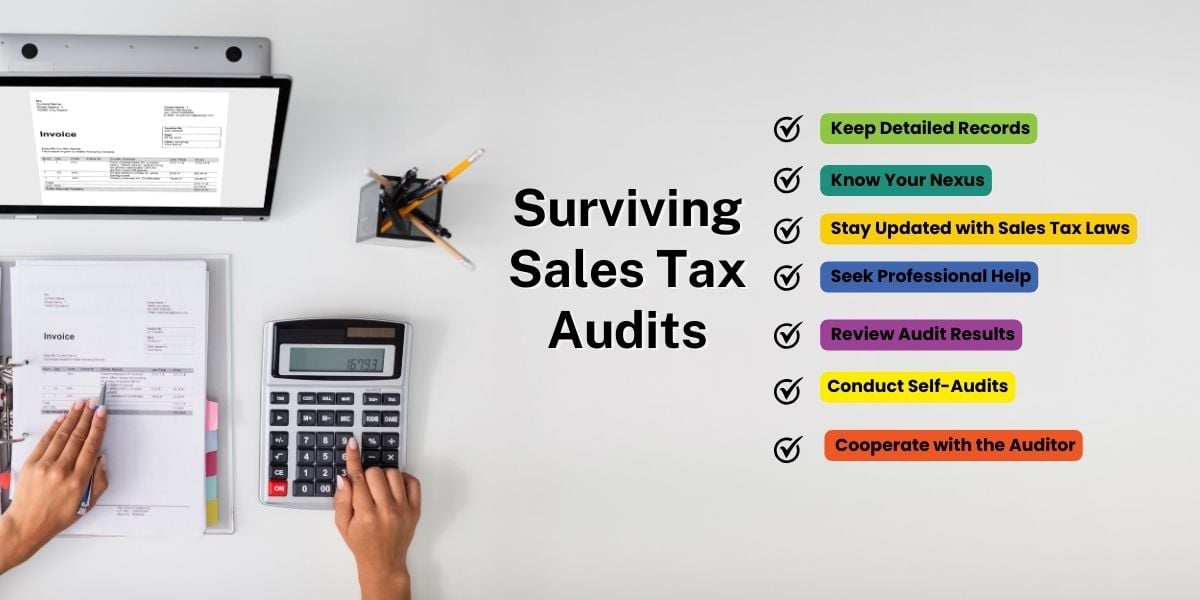
🔹 Keep Detailed Records:
Maintain organized records of transactions, including invoices, receipts, tax exemption certificates, and other related documents. Such records are your first line of defense in a sales tax audit.
🔹 Know Your Nexus:
Understanding where you've established a business presence or "nexus" is essential, especially for businesses dealing with online sales tax.
🔹 Stay Updated with Sales Tax Laws:
Sales tax and tax exemption laws often change by region. Keep yourself updated about laws applicable to your business.
🔹 Seek Professional Help:
A skilled tax advisor can help interpret complex tax laws, ensuring your business complies with them.
🔹 Conduct Self-Audits:
Regular self-audits allow you to detect and rectify potential compliance issues before they appear in an official audit.
🔹 Cooperate with the Auditor:
Maintain respectful and cooperative communication with the auditor. Provide them with clear information and follow their instructions thoroughly.
🔹 Review Audit Results:
Once you receive the audit findings, review them meticulously. Consult your tax advisor if you have any objections or questions.
A sales tax audit needn't be a cause for panic. By understanding the process, maintaining thorough records, and utilizing professional advice, you can sail through a sales tax audit, ensuring your business remains compliant and geared for success.
Successful Entrepreneurship: Mastering the Art of Sales Tax Management
Embarking on the journey of entrepreneurship is indeed challenging, but as Steve Jobs once said, "I'm convinced that about half of what separates successful entrepreneurs from the non-successful ones is pure perseverance."
As you navigate the complexities of sales tax, intellectual property and research and development, remember each challenge overcome is a victory towards your ultimate success. The path to a successful business requires relentless commitment, an unquenchable thirst for learning, and the agility to adapt to evolving scenarios.
In the face of changes, such as transforming business planning formats or shifts in sales tax collection methodologies, don't lose heart. Instead, stay fueled by motivation, seek guidance whenever required, and leverage resources and tools designed to bolster your entrepreneurial journey.
Harness this guide to empower your adventure ahead. Remember what renowned businessman Mark Cuban said, "There's no such thing as a mistake - as long as you learn from it." Equip yourself with the right knowledge and unwavering determination to achieve outstanding success, etching your business dream into reality.
Recall the words of inventor Thomas Edison, "I have not failed, I've just found 10,000 ways that won't work." Treat each challenge encountered, whether in intellectual property, research and development, or perfecting your business planning format, as an opportunity to learn and develop resilience.
Understanding and effectively managing sales tax is a vital cog in your entrepreneurial toolkit. Mastery in this domain not only ensures legal compliance but also dodges potential distractions, allowing you to concentrate on what truly matters – scaling your business and providing unmatchable experiences to your customers. So, here's to your entrepreneurial journey – may you navigate towards your remarkable success story.
Discover the Right Tools for Your Startup
Take our 2-minute quiz to find tools tailored to your specific needs and goals.
Take the QuizTakes only 2 minutes


