
Effective SWOT Analysis for Businesses: Beginner's Guide
Master SWOT analysis for business success! Learn to assess strengths, weaknesses, opportunities, and threats with our step-by-step guide.

If you're an entrepreneur or are starting a new business, one of the critical steps you need to follow is creating a sustainable strategy for your business. A SWOT analysis is a simple yet powerful tool that can help you understand your business's strengths, weaknesses, opportunities, and threats. In this comprehensive guide, we'll cover everything you need to know about conducting a SWOT analysis for your business and how it can help you make informed decisions for your company.
What is a SWOT Analysis?
A SWOT analysis is a strategic planning tool that businesses use to evaluate their current position. It stands for Strengths, Weaknesses, Opportunities, and Threats. It also helps businesses create a clear understanding of their internal and external factors, making it easier to make effective decisions and build a sustainable business strategy. By analyzing each component, businesses can identify key areas of growth, address weaknesses, and maximize opportunities.

Understanding the Four SWOT Components: A Strategic Perspective
In the realm of business planning format, one indispensable tool that startups and businesses rely on is the SWOT analysis. It's a framework that dissects your business's internal and external factors into four essential components: Strengths, Weaknesses, Opportunities, and Threats.
Let's delve into each of these components, accompanied by practical insights to help you grasp their significance.
Strengths: Leveraging Your Unique Advantages
Strengths encompass the distinctive characteristics that give your business a competitive edge. These might include having skilled employees, innovative products, valuable partnerships, or a loyal customer base. By recognizing and capitalizing on your strengths, you can gain a significant competitive advantage over your competitors.
Example: Suppose you're running a tech startup, and you've identified that your strength lies in having a highly talented and innovative development team. You can leverage this strength to consistently deliver cutting-edge solutions, setting your company apart in the market.
Weaknesses: Addressing the Gaps
Weaknesses are areas where your business falls short and requires improvement. These might include a lack of resources, ineffective marketing strategies, or poor customer service. Identifying weaknesses is essential for enhancing your business's overall performance.
Example: If your weakness lies in inefficient supply chain management, you can address this by optimizing your logistics processes, which can lead to cost savings and improved customer satisfaction.
Opportunities: Capitalizing on External Factors
Opportunities pertain to external factors that could potentially benefit your business. This might involve emerging markets, changes in regulations, or technological advancements. Recognizing opportunities early on allows you to gain a competitive advantage and adapt to changes in the business landscape.
Example: Consider a marketing agency that identifies a growing trend in digital advertising. By swiftly embracing this opportunity and expanding their digital marketing services, they can tap into a burgeoning market segment.
Threats: Safeguarding Against Potential Challenges
Threats encompass external factors that could potentially harm your business. These could range from increased competition and shifts in consumer behavior to economic downturns. Understanding threats is critical for preparing your business to navigate unexpected changes and mitigate potential risks.
Example: A restaurant business may identify seasonality as a threat. To counter this, they can develop strategies to attract customers during slow seasons, such as offering special promotions or introducing seasonal menu items.
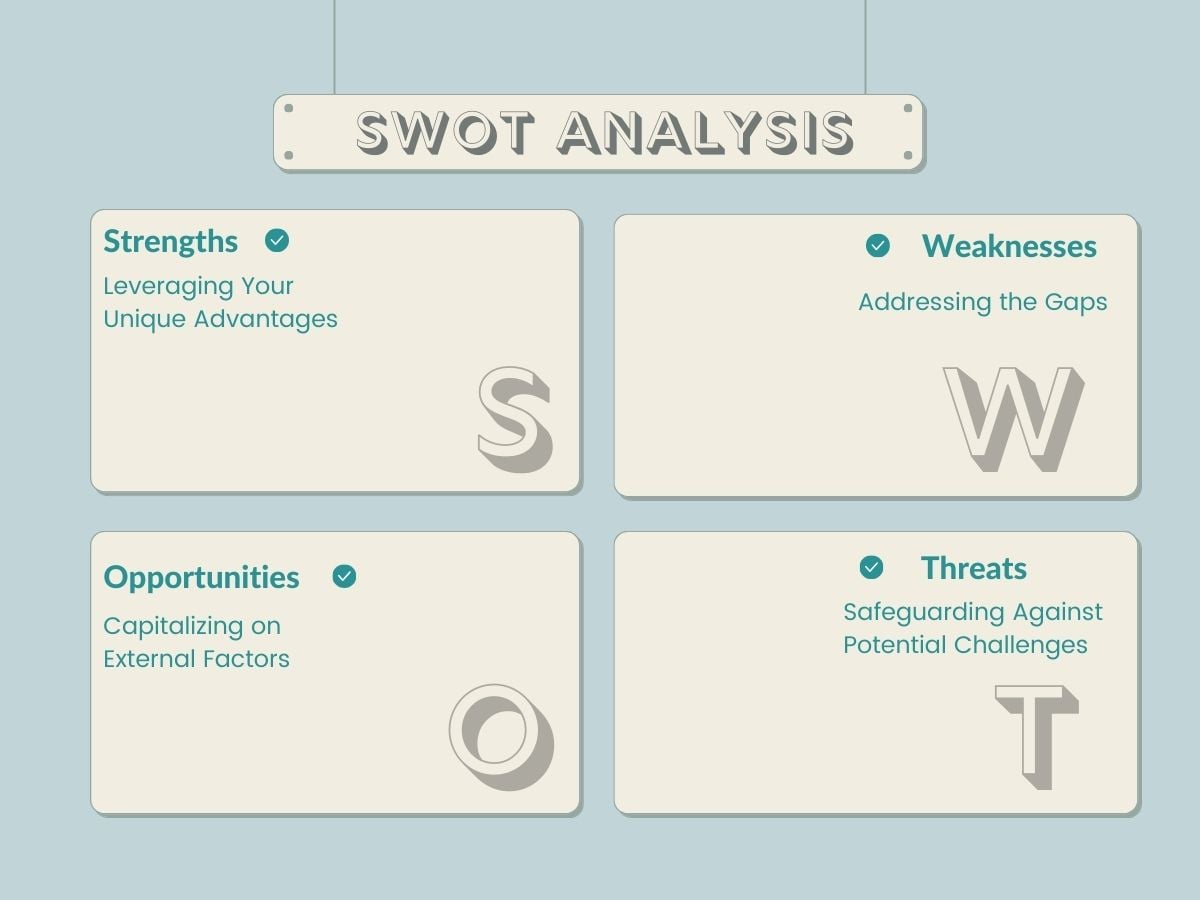
By comprehensively understanding these four SWOT components and integrating them into your business planning format, you equip your startup or business with valuable insights. These insights enable you to make informed decisions, capitalize on strengths, address weaknesses, seize opportunities, and safeguard against threats, ultimately positioning your venture for long-term success.
How to Conduct a SWOT Analysis
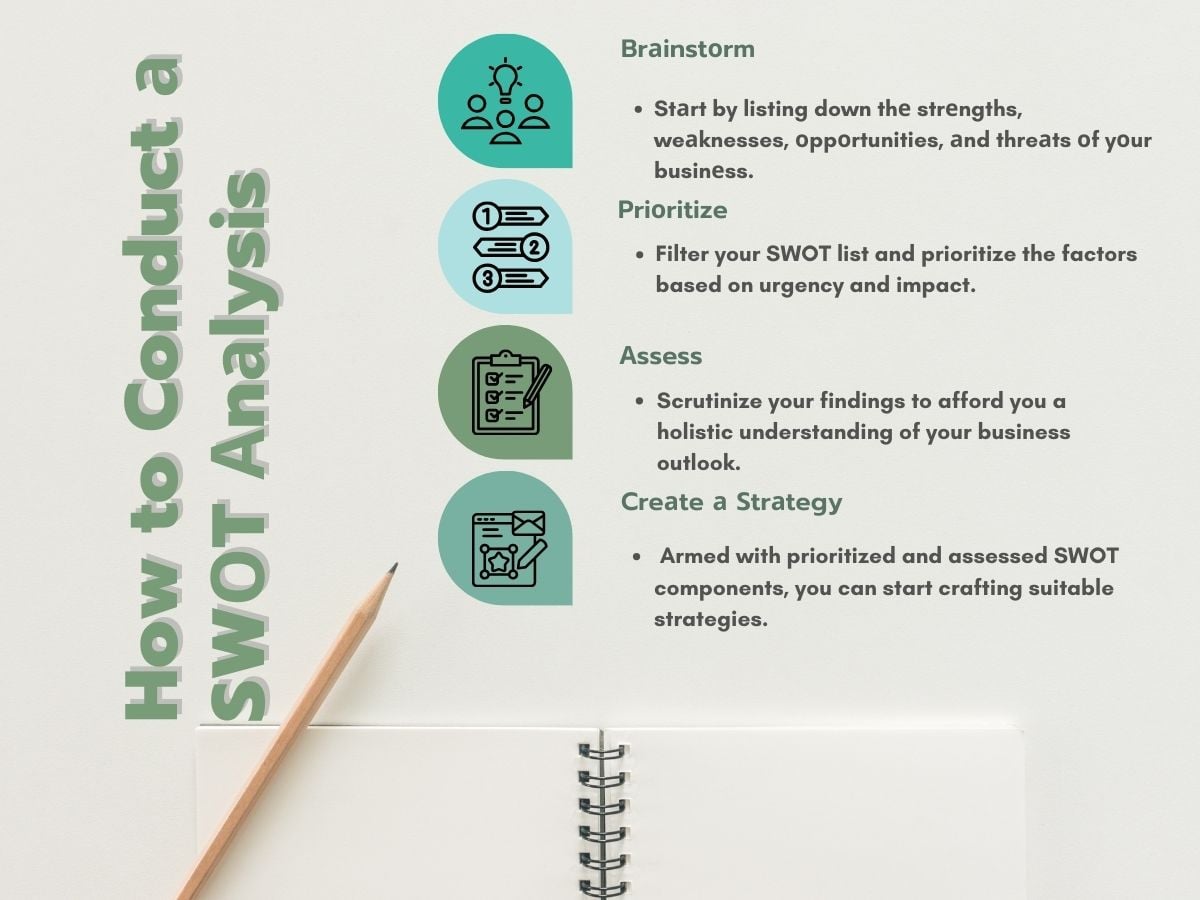
Now that you understand the components of SWOT, it's time to start conducting your analysis. We've listed down some practical ways to help you get started:
Brainstorm:
Start by listing down the strengths, weaknesses, opportunities, and threats of your business.
Involve your team in a brainstorming session to create a comprehensive list of your business strengths, weaknesses, opportunities, and threats. For instance, if you're a tech startup, strengths might include a skilled development team, while a weakness could be limited brand recognition. Be as honest and literal as possible.
Prioritize:
The next step is to filter your SWOT list and prioritize the factors based on urgency and impact. This shuffled list might reveal some immediate measures needed that were not apparent before. For instance, if you identify a significant, immediate opportunity (an under-served potential customer base), shifting resources to cater to this will prove advantageous.
Assess:
Once your SWOT factors are prioritized, it's time for a detailed examination. Scrutinize your findings to afford you a holistic understanding of your business outlook. Be sure to validate your assessments through data, which could involve checking your past sales records or looking at industry trends that may affect your business.
Create a Strategy:
Finally, armed with prioritized and assessed SWOT components, you can start crafting suitable strategies. Consider the following:
- Can you utilize your strengths to capitalize on available opportunities?
- How will you continue to serve your target customers despite identified weaknesses?
- Can you convert your weaknesses into strengths?
How will you insulate your business from potential threats?
Best practices for presenting a SWOT analysis include a clear, concise format - typically a 2x2 grid, with each quadrant showcasing one aspect of the SWOT. Presenting it in an organized and visual manner will allow you to communicate your findings effectively to stakeholders, aiding in strategic decision-making.
Implementing a SWOT analysis when you are planning on how to make a business plan allows you to explore strategic measures to tackle any business situation, ensuring robust steps towards success.
Real-World Examples
Many successful businesses have leveraged SWOT analysis to improve their decision-making and strategies. One example is Amazon, a company that continuously evaluates its SWOT to make critical decisions. Amazon's SWOT analysis revealed that one of its key strengths is offering a wide variety of products, while its weaknesses included delivery times and supply chain disruptions.
Amazon identified the opportunities to expand its technology and services, and the threats of competition and economic instability. By leveraging its strengths, mitigating weaknesses, and exploiting opportunities, Amazon has become one of the most successful companies globally.
Acting on SWOT Insights
SWOT analysis provides businesses with insights that help them develop and achieve their strategic goals. Here are some recommendations for how business owners can act on SWOT analysis insights:
Expanding on acting on SWOT insights:
- Leverage your Strengths:
To outperform competitors, make strategic use of your strengths in alignment with your market analysis. If your market research reveals a niche your business fills exceptionally well, or if your competitive analysis shows you have a unique advantage, ensure those strengths are central to your operations and marketing.
- Address Weaknesses:
Tackle your identified weaknesses by creating an actionable plan to improve specific areas. For instance, if market research indicates a weak digital presence, take steps to strengthen your online visibility, increase social media engagement, or improve your website design and SEO practices.
- Take Advantage of Opportunities:
Recognize emerging trends, evolving customer preferences, and untapped market segments to seize opportunities in your market. For example, if your analysis reveals demand for a new product line or service among your target customers, capitalize on that opportunity by developing and promoting the offering to meet their needs.
- Mitigate Threats:
Proactively manage potential threats by staying informed, creating contingency plans, and maintaining flexibility in your operations. Be prepared to adopt new strategies to navigate turbulent times or to tackle any competitive challenges. For instance, if your competitive analysis warns of an aggressive marketing campaign from a competitor, ready a counterstrategy to maintain your market share or client base.
SWOT analysis helps identify strengths, address weaknesses, recognize opportunities, and mitigate threats to inform business owners' strategic decisions. Incorporate market research, market analysis, and competitive analysis into your SWOT process to build a well-rounded and insightful understanding of your business landscape. Acting on these insights will steer your company towards continued growth and success.
Embracing SWOT Analysis for Business Success
A SWOT analysis is more than a mere diagnostic tool - it's the cornerstone to making informed, strategic decisions that empower businesses to outshine in their respective markets. Mastering the four SWOT components, underpinned by comprehensive research and translated into actionable strategies, paves the way toward attaining strategic goals.
For entrepreneurs fine-tuning their startup vision or drafting their first business plan, the importance of SWOT analysis cannot be overstated. It provides a high-level overview of your enterprise's landscape, helping you position your offerings, identify target markets, and pitch your business to potential investors effectively.
New startups and existing businesses can benefit from the illuminating power of a SWOT analysis. It highlights areas in which a company excels, zones where improvement is needed, opportunities ready for seizing, and threats demanding preparation. This rounded perspective equips business owners to write a business plan that feasibly fosters growth.
Remember, acknowledging your weaknesses is not an admission of failure. Instead, it's a sign of wisdom and first step towards leaning into your strengths, a move integral to sustainable growth.
Embrace SWOT analysis as a competitive weapon in business planning and strategy. Your commitment to thoughtful analysis and strategic execution will not only steer your business in the right direction but also inspire you with the confidence and insights needed to navigate the complexities of the business world and break new ground in your industry.
Discover the Right Tools for Your Startup
Take our 2-minute quiz to find tools tailored to your specific needs and goals.
Take the QuizTakes only 2 minutes


