
Integrated Business Planning: Conquer Solo Planning Hurdles
Discover the benefits of integrated business planning and practical solutions to overcome the pain of doing it alone. Start your entrepreneurial journey on the right path to success.

Defining integrated business planning and its importance
Integrated business planning is a way for companies to connect all the different parts of their business and make sure they are all working together towards a common goal. It involves bringing together teams like finance, sales, and operations so they can coordinate and make decisions together. This is important because it helps everyone in the company understand the big picture and work towards the same objectives.
Here's an article that explains what an integrated business planning is and how it can help you.
Understanding the drawbacks of independent business planning:
a) Lack of expertise and privileged insights.
When you try to handle business planning individually, you may lack the necessary expertise in various areas of planning. From finance and marketing to operations and human resources, each aspect of your business requires specialized knowledge. Without this expertise, you may miss out on crucial insights that could make or break your business.
b) Time constraints and juggling multiple responsibilities.
As an entrepreneur, your plate is already full of countless duties. You need to manage day-to-day operations and strategize for long-term growth. This can result in rushed or incomplete plans that may not serve your business's full potential.
c) Difficulties in accessing accurate data and keeping it organized.
Accurate and organized data is the backbone of effective business planning. Anyway, when you are working alone, accessing reliable data can be a hurdle. When you are working on your own, it can be hard to find good information. When you don't have good data, it's hard to make good decisions.
The Benefits of an Integrated approach
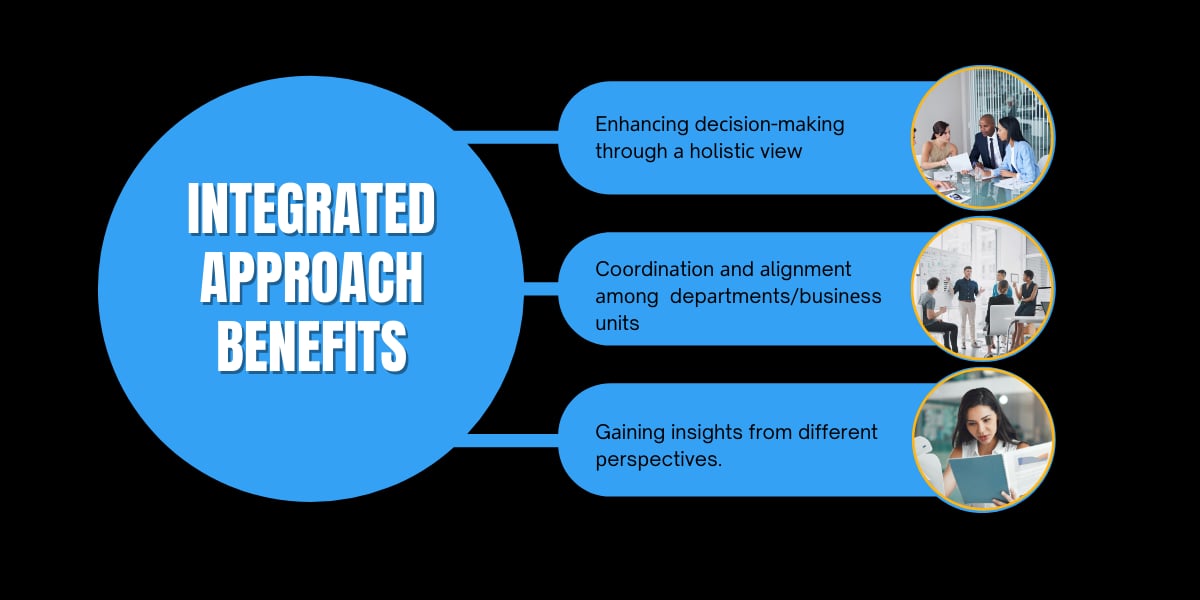
a) Enhancing decision-making through a holistic view.
Integrated business planning allows you to take a holistic view of your business. There is a new way to look at businesses that makes it easier to understand how different parts of your business work together. This enables you to make informed and well-rounded choices that align with your overall business objectives.
b) Coordination and alignment among departments/business units.
When different departments or business units work in silos, coordination and alignment can become significant challenges. Integrated business planning breaks down these barriers by fostering collaboration and ensuring all teams are working towards a shared goal. This alignment enhances efficiency and reduces redundancies, ultimately improving overall business performance.
c) Gaining insights from different perspectives.
When you plan alone, you may miss out on valuable insights that come from engaging with different perspectives. Integrated business planning encourages cross-functional collaboration, allowing you to tap into your team members' collective wisdom and expertise.
It is important for businesses to share ideas with each other. This way they can create more opportunities and become more aware of challenges.
Practical solutions to alleviate the pain of independent planning:
a) Utilizing business planning software for streamlined processes.
In today's digital age, there are various business planning software solutions available that can streamline and automate the planning process. These tools provide integrated dashboards, data analytics, and forecasting capacities enabling you to access accurate data, create projections, and make informed decisions more efficiently. Utilizing such software can significantly alleviate the pain points of independent planning.
We encourage you to check out Startuptools.ai, a free online tool that helps you create a well-structured and persuasive business plan. Simply input your basic information and the AI engine generates the rest, writing a compelling narrative and financial projections. Within minutes, you can refine and customize the generated content to fit your unique vision and goals. Startuptools.ai is a game-changer for entrepreneurs looking to fast-track their business planning process.
b) Outsourcing parts of the planning process for specialized expertise.
Recognizing that you can't do everything on your own is a crucial aspect of effective business planning. It is important for independent planners to regularly check their plans and make changes as necessary. This helps find areas that are not working well and make adjustments to keep moving forward and make the planning process easier. This could include hiring consultants or engaging with agencies that specialize in finance, marketing, or other areas relevant to your business.
c) Seeking mentorship and guidance from industry experts or consultants.
Mentors can help you figure out how to get your business off the ground. When you're writing all your plans yourself, you run the risk of missing out on important details. That's why it's a good idea to review your plans regularly and make necessary adjustments. This will help you find areas that are not working well so they can change the plans to work better.
d.) Break tasks into smaller, manageable steps:
Often, independent planning can feel overwhelming when faced with big objectives. Breaking down tasks into smaller, actionable steps makes them more achievable. By focusing on one step at a time, planning becomes more manageable and less daunting.
e.) Regularly evaluate and adjust plans:
After you make a business plan, review it to see if it is working. If not, you can change the plan so that the new plan will work.
Real-life examples showcasing the success of Integrated Business Planning
a) Case study 1:
How Company X achieved significant growth and improved results.
Company X used to have a problem with not knowing enough about their business, and they didn't have a good plan. But now, they are fixing this problem by connecting their planning processes and making a better business strategy. By implementing integrated business planning, they were able to align their finance, sales, and operations teams. This alignment resulted in improved coordination, faster decision-making, and ultimately led to significant growth and improved financial results.
b) Case study 2:
Overcoming challenges by implementing integrated planning at Company Y.
Company Y, a medium-sized manufacturing company, faced challenges in accurately forecasting demand and managing inventory. By adopting integrated business planning practices, they were able to break down silos between their sales, production, and supply chain teams.
When Company Y integrated their planning, something good happened. They got better at predicting how many products they would need, so they didn't end up with too much inventory lying around. They also got better at making things efficiently, which saved them money.
Implementing Integrated Business Planning
a) Initial Steps to Consider.
To start implementing integrated business planning, it is essential to take a step back and assess your current business planning processes. Identify the pain points and areas where improvements can be made. Create a roadmap outlining the steps you need to take to integrate your planning efforts and align your teams.
b) Importance of collaborative decision-making.
Collaborative decision-making is at the core of integrated business planning. Encourage cross-functional collaboration, engage your team members, and foster an environment that values diverse perspectives. You will need to ask other people to help you make good decisions. You can't make a good decision unless you take enough time to decide.

This inclusive approach has several benefits:
➤ Diverse Perspectives: We want to get everyone's ideas about how we can improve our company. Everyone will share some of their ideas with us. People will see things they might not otherwise notice. In this way, we can try to make sure we don't miss anything that is important.
Increased Ownership and Buy-in: Involving stakeholders from various functions and departments promotes collaboration and alignment. It brings different teams together, encourages open communication, and fosters a shared understanding of the organization's goals and strategies. This collaboration enables the breaking down of silos and helps create a cohesive and integrated business plan.
➤ Collaboration and Alignment: Involving stakeholders from various functions and departments promotes collaboration and alignment. It brings different teams together, encourages open communication, and fosters a shared understanding of the organization's goals and strategies. This collaboration enables the breaking down of silos and helps create a cohesive and integrated business plan.
➤ Expertise Sharing: Each stakeholder brings their expertise and knowledge to the decision-making process. For example, the sales team can provide insights into customer demand and market trends, while the finance team can contribute their financial expertise. By leveraging the collective expertise of stakeholders, organizations can make informed decisions and develop comprehensive business plans.
c) Continuous monitoring and evaluation for dynamic adjustments.
Business planning is an ongoing process, and it is crucial to regularly monitor and evaluate your plans' effectiveness. Set Key Performance Indicators (KPIs) to measure progress and make any necessary adjustments along the way. Integrated business planning allows for flexibility and adaptability, enabling you to navigate the ever-changing business landscape effectively.
Setting KPI's : Four Essential Steps for Dynamic Adjustments 🎯
1. Establish Clear Objectives:
The first step in setting Key Performance Indicators (KPIs) for continuous monitoring and evaluation is to establish clear objectives. Clearly define what you aim to achieve through monitoring and evaluation processes and ensure these objectives are aligned with your organization's overall goals and strategies. This will serve as the foundation for identifying relevant KPIs that can gauge progress and success.
2. Identify Relevant Metrics:
Once the objectives are defined, it is crucial to identify the most relevant metrics that will enable you to measure progress and make dynamic adjustments. These metrics should align with the overall objectives and provide meaningful insights into the performance and effectiveness of the activities or processes being monitored. Consider both quantitative and qualitative metrics that can provide a comprehensive understanding of the outcomes.
3. Define Measurable Targets:
To effectively monitor and evaluate your progress, it is important to set measurable targets for each identified KPI. These targets should be specific, attainable, relevant, and time-bound (SMART). By setting clear targets, you can easily track performance against these objectives and identify areas that require adjustments or improvements.
4. Establish Continuous Review and Adjustments:
Continuous monitoring and evaluation require regular reviews and adjustments based on the insights derived from the KPIs. Establish a system where you regularly look at the data you collect to find patterns, things that stand out, or places where things aren't going according to plan. Once you find those things, make changes to your plans, what you're doing, or how you're using your resources so that you can reach your goals.
Integrated business planning provides entrepreneurs and individuals with the tools and strategies needed to overcome the pain of independent planning. By embracing an integrated approach, you can enhance decision-making, foster alignment and coordination among teams, and gain valuable insights that lead to business success.
Utilizing business planning software, outsourcing specialized expertise, and seeking mentorship from industry experts are practical solutions that alleviate the challenges of independent planning. So, as you embark on your entrepreneurial journey, remember that integrated business planning is your path to success.
Discover the Right Tools for Your Startup
Take our 2-minute quiz to find tools tailored to your specific needs and goals.
Take the QuizTakes only 2 minutes


