
Simple Business Planning for Beginners
Simplify Your Path to Entrepreneurial Success with Simple Business Planning For Beginners. Insights, Examples & Strategies.

Are you on the brink of launching your own business venture? Don't be daunted by the planning process. This guide will demystify the practice of simple business planning, offering valuable insights, real-world examples, and practical guidance. Dive in to discover the significance of straightforward and effective business planning on your path to entrepreneurial success.
Understanding Simple Business Planning
Before we delve into the specifics, let's clarify what simple business planning entails. Simple business planning is the process of setting clear goals and outlining the steps needed to achieve them. It's about creating a roadmap that guides your entrepreneurial journey without unnecessary complexity.
◼️ Goal Clarity: Learn how to define clear and achievable goals that serve as the foundation of your business planning.
◼️ Streamlined Strategy: Discover how simplicity in strategy development can lead to better execution and results.
◼️ Practical Execution: Explore practical ways to turn your business plan into actionable steps that drive progress.

The Significance of Simple Business Planning
🟡 Focus and Direction: Understand how simple business planning provides clarity and direction, helping you stay on course even in turbulent times.
In the fast-paced and ever-changing world of business, it's easy to get lost in the whirlwind of daily tasks, decisions, and challenges. A simple business plan acts as a compass, providing clarity and direction, ensuring you stay on course even amidst turbulent times. It serves as a roadmap, outlining your goals, strategies, and action steps, keeping you focused on your ultimate objectives.
With a well-defined plan, you can make informed decisions aligned with your overall vision, avoiding impulsive choices that might lead you astray. It helps you prioritize tasks, allocate resources effectively, and navigate challenges with a clear sense of purpose.
☝🏻 Consider a ship captain venturing into the vast ocean. Without a navigational chart, the captain would be adrift, vulnerable to the whims of the wind and currents. Similarly, a business without a simple plan is like a ship without a rudder, destined for uncertainty and potential failure.
🟡 Resource Efficiency: Examine how streamlined planning optimizes the allocation of your resources, ensuring you get the most out of them.
Resources, whether financial, human, or material, are the lifeblood of any business. A simple business plan acts as a guardian of these precious resources, ensuring they are utilized efficiently and effectively. By streamlining your planning process, you can optimize resource allocation, eliminating unnecessary expenses and maximizing the impact of your investments.
A well-crafted plan helps you identify and prioritize resource needs, ensuring you have the right tools and support in place to achieve your goals. It encourages you to make data-driven decisions, avoiding wasteful expenditures and ensuring your resources are directed towards areas that yield the greatest return.
☝🏻 Imagine a gardener planting seeds without a plan. Without knowing the type of plants, their spacing requirements, and watering needs, the gardener risks wasting seeds, water, and time. Similarly, a business without a simple plan is like a gardener without a blueprint, prone to resource mismanagement and suboptimal outcomes.
🟡 Risk Mitigation: Discover how simplicity in planning helps identify and address potential risks effectively.
The business landscape is not without its perils. Economic downturns, market shifts, and technological disruptions can pose significant threats to even the most established companies. A simple business plan, however, serves as a risk mitigation tool, helping you identify and address potential pitfalls before they derail your progress.
Analyze your business environment, competitors, and potential challenges, you can develop strategies to minimize risks and safeguard your venture.
☝🏻 Think of a hiker embarking on a treacherous mountain trail. Without a map, the hiker is unaware of potential hazards, steep cliffs, or sudden weather changes. Similarly, a business without a simple plan is like a hiker without a map, susceptible to unforeseen risks that could jeopardize its success.
Simple business planning is not just about filling out forms; it is a smart way to make sure your business is successful. By making a simple plan, you can make sure you are focused on the right things, using your resources wisely, and avoiding problems. This will help your business grow and be successful in the long run.
Implementing Simple Business Planning
🔹 Lean Approach
Begin with creating a "Lean Canvas," a one-page business plan template that summarizes key points about your business idea. Structured, yet agile, this approach helps you focus on your business's key aspects and allows for easy adjustments as you learn more about the market and your customers.
🔹 Market Research
Utilize online tools like Google Trends or Social Mention to understand current industry trends, customer needs, and competitors. Remember, market research is not a one-time activity but an ongoing process that keeps your business aligned with market dynamics.
🔹 Key Performance Indicators (KPIs)
Choose KPIs that tie directly to your business goals. Use a dashboard tool like Google Data Studio or Tableau to visualize and monitor these KPIs regularly, helping you make informed decisions and promptly adjust strategies if needed.
Real-World Examples of Simple Business Planning
To illustrate the concept, let's explore real-world examples of businesses that have thrived through simple business planning:
Example 1: Google - Focused Innovation
Discover how Google's simple yet powerful business plan has fueled its innovation and growth.
Example 2: The Honest Company - Customer-Centric Approach
Learn how The Honest Company's commitment to simplicity and customer-centricity has driven its success.
Strategies for Effective Simple Business Planning
🔸 Keep It Concise
A common misconception about business plans is that they need to be lengthy and overly complex. However, a simple business plan should be just that - simple. Focus on the essentials: your business goals, strategies, and action steps. Avoid getting bogged down in unnecessary details that can obscure your core message.
Here are some tips for keeping your business plan concise:
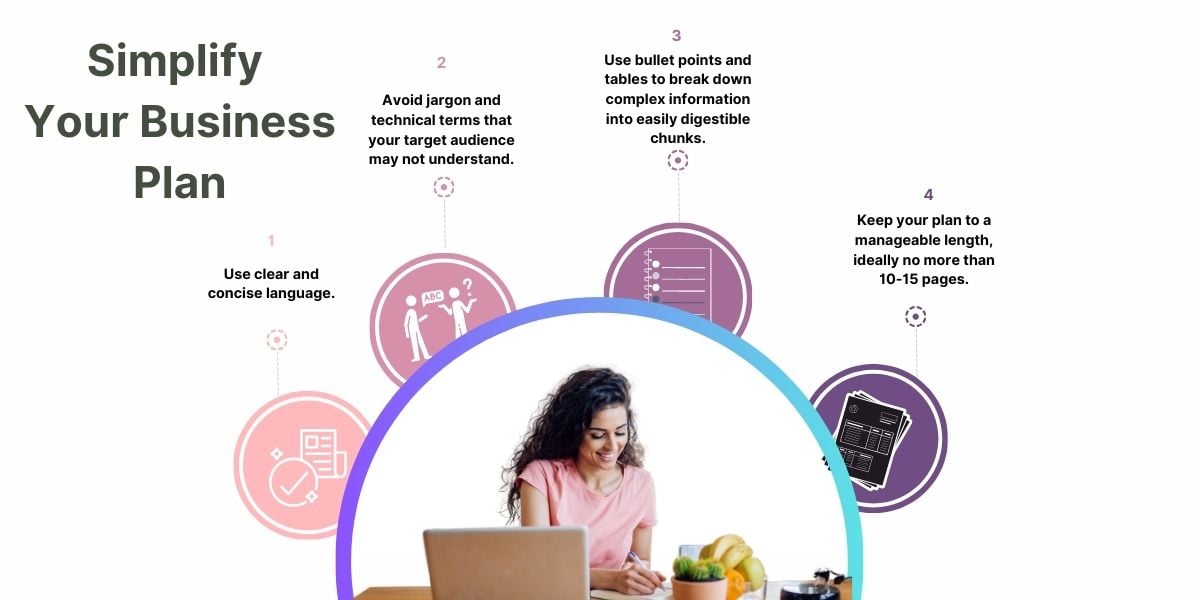
☑️ Use clear and concise language.
☑️ Avoid jargon and technical terms that your target audience may not understand.
☑️ Use bullet points and tables to break down complex information into easily digestible chunks.
☑️ Keep your plan to a manageable length, ideally no more than 10-15 pages.
Remember, your business plan is a tool, not a document to impress potential investors. A concise and to-the-point plan will be more effective in guiding your decision-making and keeping you on track.
🔸 Customer-Centricity
Putting your customers at the forefront of your business planning is crucial for simplifying decision-making and ensuring long-term success. By understanding your customer needs, preferences, and pain points, you can tailor your products, services, and strategies to better meet their expectations.
Here are some ways to incorporate customer-centricity into your simple business plan:
• Conduct market research to understand your target audience's demographics, behaviors, and preferences.
• Analyze customer feedback and reviews to identify areas for improvement.
• Develop customer personas to represent different segments of your target market.
Regularly assess customer satisfaction through surveys and feedback forms.
By keeping your customers at the heart of your business planning, you can make informed decisions that align with their needs, leading to increased customer loyalty and a more successful business.
🔸 Regular Review
Your business plan is not a static document; it should be a dynamic tool that evolves alongside your business. Regularly reviewing and adapting your plan is essential for ensuring it remains relevant and effective in achieving your goals.
Here's how to make regular review and adaptation a part of your business planning process:
• Schedule regular review sessions, ideally quarterly or bi-annually.
• Assess your progress against the goals and objectives outlined in your plan.
• Identify areas where your plan needs to be updated or adjusted based on market changes, customer feedback, or new opportunities.
• Make the necessary changes to your plan, ensuring it continues to align with your business's current direction and goals.
Regular review and adaptation will keep your business plan relevant, allowing you to pivot and adapt as your business grows and the market landscape evolves.
The Power of Simplicity in Entrepreneurship
In the dynamic and often overwhelming world of entrepreneurship, it's easy to get swept up in the whirlwind of complex strategies, intricate financial projections, and elaborate marketing plans. However, amidst the clamor for sophistication, there lies a powerful tool often overlooked: the art of simple business planning.
Simple business planning isn't about compromising on substance or vision; it's about distilling your entrepreneurial aspirations into a clear, concise, and actionable roadmap. It's about empowering yourself with the focus, resource efficiency, and effective risk management that are crucial for navigating the entrepreneurial landscape.

For entrepreneurs and startups, embracing simplicity in business planning is not a choice; it's a strategic advantage. It allows you to:
🟪 Cut through the noise and focus on the essentials: In a world saturated with information and endless possibilities, simplicity provides clarity and direction. It helps you prioritize your goals, identify the most critical actions, and avoid getting bogged down in unnecessary details.
🟪 Maximize your resources without wasting time or money: Simple business planning ensures you allocate your limited resources wisely, avoiding wasteful expenditures and ensuring your investments yield the greatest return. It's about making smart decisions with the resources you have, not about chasing grand ambitions with limited means.
🟪Proactively identify and mitigate risks: The entrepreneurial journey is not without its challenges. Simple business planning empowers you to anticipate potential roadblocks, adapt to changing circumstances, and emerge stronger from adverse situations. It's about recognizing potential risks early on and taking proactive measures to minimize their impact.
As you embark on your entrepreneurial journey, don't be afraid to embrace the power of simplicity in business planning. By distilling your complex ideas into a clear and actionable plan, you'll not only navigate the challenges but also pave a straightforward path to entrepreneurial success in a complex business landscape.
Remember, simplicity is not about compromising on ambition; it's about empowering yourself with the tools and focus you need to transform your dreams into reality. 😎
Discover the Right Tools for Your Startup
Take our 2-minute quiz to find tools tailored to your specific needs and goals.
Take the QuizTakes only 2 minutes


