
Social Media Marketing Plan for Entrepreneurs
Master the art of a social media marketing plan tailored for entrepreneurs. Learn from real-life success stories and adapt with digital trends.

In today's digital age, a strong online presence is no longer optional; it's a necessity. Brands need powerful marketing strategies, including an effective social media marketing plan. This plan acts as a compass, guiding the online activities of entrepreneurs and startups, and aligning their social media efforts with robust business planning format. From boosting brand visibility to increasing customer acquisition, a social media marketing plan is a vital component of any successful marketing strategy.
The Importance of a Social Media Marketing Plan
A social media marketing plan is like a blueprint. It outlines your business goals, target audience, and strategies for increasing online visibility. Crafting such a plan allows consistency, enabling entrepreneurs to build strong brand identity over time across various platforms.
With an efficient plan, productivity can increase as resources are strategically allocated. In relation to marketing plan communication, a well-crafted plan clarifies the message of the brand, ensuring it reaches the right audience at the right time.

Having a list of quantifiable goals helps in analysing the efficacy of social media strategies. This also enables entrepreneurs to deliver targeted content, tailored to the interests and needs of their audience, offering a competitive edge in the digital market.
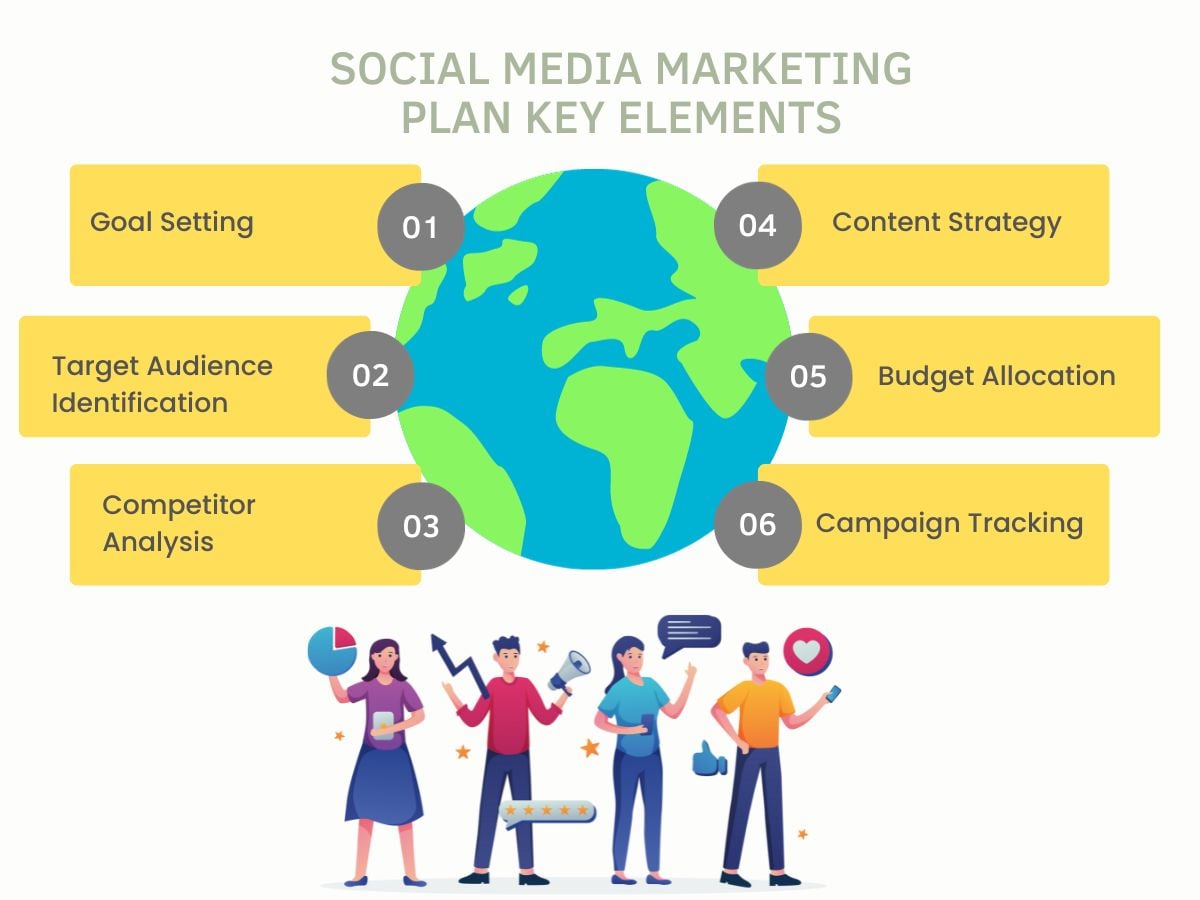
Key Elements of a Social Media Marketing Plan
☑️ Goal Setting: Start by setting clear, attainable goals. For instance, an upcoming fitness startup may aim to increase brand awareness or website traffic. These goals influence the overall marketing strategy and dictate the trajectory of business growth.
Example: A fashion brand might want to boost sales by 20% over the next quarter using Instagram promotions.
☑️ Target Audience Identification: Identify the traits and behaviors of your intended customers. This understanding can help tailor your content efficiently, increase brand engagement, and lay the foundation for a robust marketing plan.
Example: A B2B software company may focus on LinkedIn for outreach, targeting professionals in specific industries.
☑️Competitor Analysis: Evaluating the social media presence of competitors provides valuable insights. By understanding their strengths and weaknesses, entrepreneurs can distinguish their brand effectively.
Example: If people are praising the customer service of your competitor on Twitter, it indicates an area to emphasize in your own brand.
☑️ Content Strategy: Decide what type of content your brand should disseminate and how often. Contents should be varied and engaging — from blog posts to videos to infographics.
Example: An art supply store may decide to post DIY tutorials on YouTube weekly to attract a wider audience.
☑️ Budget Allocation: Decide on how much to invest in social media efforts considering advertisement costs, content creation, and other operational expenses.
Example: Budget could be allocated to Facebook ads aiming to amplify brand visibility.
☑️ Campaign Tracking: Utilize tools to track your social media performance. This helps in measuring return on investment (ROI) and enables you to adjust your strategies as needed.
Example: You could use Google Analytics to track your website traffic, conversions, and user behavior stemming from your social media campaigns.
Practical Tips for Marketing Analysis
1. Market Research:
Don't just dip your toes in, dive headfirst into comprehensive research! Immerse yourself in industry reports, competitor analysis, and surveys to understand your target audience's desires, frustrations, and everything in between. Imagine a vegan beauty brand – delving into the latest trends, natural ingredient buzzwords, and eco-conscious consumer habits can spark brilliant ideas for new product lines that resonate with customers.
2. SWOT Analysis:
This isn't a fancy gym routine, it's a powerful tool to assess your business's inner workings. Take a hard look at your strengths (like stellar customer service), weaknesses (maybe low website traffic), opportunities (untapped markets), and potential threats (new competitors). Picture an online tutor service – identifying their website as a weakness? No problem! They can develop an SEO plan to rocket to the top of search results and attract eager students.
3. Unique Selling Propositions (USPs): What makes your business the Beyonce of its industry? Pinpoint those unique features that set you apart and blast them on every platform! Are you an eco-friendly clothing brand using recycled packaging? Shout it from the rooftops (digitally, of course) on Instagram and make conscious consumers swoon.
4. Social Media Savvy:
Each platform is like a different party – you wouldn't wear flip-flops to a black-tie gala, right? Understand the vibe of each platform (think witty banter on Twitter, professional connections on LinkedIn, and captivating visuals on Instagram) to attract the right audience. A career consultancy service, for example, wouldn't waste time on TikTok dances – they'd focus on LinkedIn to connect with career-focused professionals.
Remember, marketing analysis isn't just about crunching numbers – it's about uncovering hidden gems of wisdom that inform your strategies and propel your business towards success. So, grab your analytical magnifying glass, get ready to dig deep, and watch your marketing magic unfold!
Crafting Strategies for Social Media Domination
In today's digital jungle, social media isn't just a playground for selfies and cat videos – it's a powerful tool for business growth. But with endless platforms and content formats, crafting a winning social media strategy can feel like climbing Mount Everest without a guide. Fear not, intrepid entrepreneurs! Here's your roadmap to content that captivates, converts, and catapults your business to success.
✅ Know Your Niche, Own Your Voice:
Before you unleash your creative beasts, understand your target audience. Who are you talking to? What are their needs, desires, and pet peeves? This research forms the foundation of your content strategy. Once you know your niche, define your brand voice – the quirky, informative, or inspiring persona that sets you apart in the online crowd.
✅ Platform Playbook:
Each platform deserves its own dance routine. Instagram thrives on captivating visuals and bite-sized stories, while LinkedIn embraces insightful articles and professional connections. Master the unique strengths of each platform:
Instagram: Captivate with stunning photos, eye-catching stories, and engaging Reels. Show your brand's personality through behind-the-scenes glimpses and customer testimonials.
LinkedIn: Share industry insights, showcase your expertise through articles and webinars, and connect with like-minded professionals through groups and discussions.
Twitter: Spark conversations with witty tweets, insightful threads, and relevant hashtags. Stay on top of trends and engage in industry discussions.
✅ Content Magic, Engagement Alchemy:
Now, for the magic ingredient: the content itself! Mix and match these formats to keep your audience hooked:
- Informative articles: Share your knowledge, debunk myths, and offer valuable tips relevant to your niche.
- Compelling stories: Connect on an emotional level through personal anecdotes, customer success stories, or even creative brand narratives.
- Interactive quizzes and polls: Get your audience actively involved and gather valuable insights into their preferences.
- Live videos and Q&A sessions: Offer real-time engagement, answer questions directly, and build a sense of community.
- Inspiration in Action:
Look no further than these entrepreneurial content champions:
🦸🏻♂️ Gary Vaynerchuk (@GaryVee) on Twitter: Ignites conversations with thought-provoking tweets and live video rants.
🦸🏻♂️ Marie Forleo (@MarieForleo) on Instagram: Empowers women entrepreneurs with inspiring quotes and behind-the-scenes glimpses of her business journey.
🦸🏻♂️ Neil Patel (@neilpatel) on LinkedIn: Shares marketing insights and industry trends through informative articles and engaging videos.
Your social media content strategy is a living document, constantly evolving with your audience and the digital landscape. Analyze, adapt, and experiment to find what resonates and watch your business soar!
💡 Bonus Tip: Don't forget to include your business planning and social media marketing plan in your overall business strategy. This ensures your online efforts are aligned with your long-term goals.
Real-Life Examples of Successful Social Media Marketing Plans
- Starbucks: Using Customer Engagement and User-Generated Content
Starbucks is known not only for its quality coffee but also for the innovative ways it makes use of social media to boost customer engagement. The famous coffee chain implements a social media marketing strategy centered on encouraging its customers to be part of their brand's story.
Starbucks stimulates its customer base to share photos of their coffee moments on platforms like Instagram, Facebook, and Twitter using specific hashtags. This strategy serves two major purposes. First, it enables Starbucks to benefit from user-generated content, which is free and relatable to potential customers.
Second, it allows Starbucks' brand reach to extend through its customers' social network, serving as a form of word-of-mouth marketing. Through this shared interaction, Starbucks manages to cultivate a sense of community and lifestyle around its brand, fostering deeper relationships with its customers, beyond just selling coffee.
- Airbnb: Harnessing the Power of Authentic Narratives Through Social Storytelling
Airbnb, the online marketplace for lodging and tourism activities, has a unique approach to its social media marketing called social storytelling. The core of this strategy lies in sharing authentic user experiences to create a personal connection with their audience.
Airbnb encourages its users to share post bookings or travel experiences on their personal social media handles, thereby creating organic, relatable content. Those personal travel stories, ranging from tables set for dinner in the Italian countryside to unique stays in a treehouse, are repurposed on Airbnb's official social channels. This strategy portrays Airbnb as more than just a room-booking service; it positions Airbnb as a gateway to unique and authentic travel experiences.
By leveraging the genuine narratives of their customers, Airbnb establishes an emotional resonance with its potential users, making the brand seem more trustworthy and appealing. This marketing method asserts Airbnb not just as a travel service, but as a community of explorers and adventurers, thus establishing a stronger bond with its audience.
Measuring Effectiveness, Adapting, and Fostering Enduring Success
Brands today can't fake authenticity. They must cultivate it by placing human experiences and interaction at the forefront. Such significance highlights the necessity of a well-crafted social media marketing strategy that forms the cornerstone of a brand's online visibility and success. As Jay Baer, a renowned marketing speaker, once said, "Content is fire, social media is gasoline."
Your business planning format should involve using the analytics tools provided by social media platforms and third-party applications to track Key Performance Indicators (KPIs). Understanding these analytics is crucial, just as conducting industry research and individual customer behavior studies is to develop progressive strategies. These findings let you comprehend your brand's interaction with its audience, allowing for a more targeted and optimized approach towards achieving your outlined goals.
Our digital era carries with it a relentless pace of innovation. With customer behavior, market trends, and technologies constantly evolving, your marketing strategy must adapt and flex accordingly. Just as Research and Development plays a crucial role in product innovation, marketing strategies must also be dynamic and innovative. The best brands, like Amazon or Netflix, are never afraid to take calculated risks and pivot their strategies based on the latest trends and technologies.
Your plan should not be seen as an unalterable document; instead, it should stay dynamic, constantly adjusted and updated in response to an ever-changing digital landscape. Remember, the key to resilience doesn't lie in resisting change but adapting to it.
By leveraging the unique benefits each platform offers, and consistently tracking and adjusting your social media strategies, you can outshine your competitors and create a lasting impact online. Facebook's COO, Sheryl Sandberg stated that "Done is better than perfect", reminding us that the power of social media lies not just in creating a space for your brand, but in harnessing its full potential to grow and thrive in the crowded digital marketplace.
We'd like to call upon all entrepreneurs to take inspiration from these lessons, apply them to your businesses, and remember, success takes time.
Patience isn't just a virtue; in the business world, it's a necessity. Keep cultivating your brand, keep engaging with your audience, and keep refining your strategy. Over time, you will see your business grow, evolve, and ultimately, flourish in the digital landscape.
Remain human in your engagement, authentic in your messages, and audiences will resonate with your brands. Now, take on the world!
Discover the Right Tools for Your Startup
Take our 2-minute quiz to find tools tailored to your specific needs and goals.
Take the QuizTakes only 2 minutes


