
Understanding Customer Experience: Fuel Your Business Growth
Explore the significance of understanding customer experience. Learn how it drives loyalty and growth. Enhance your business strategy today.

In the competitive world of business, success often hinges on a simple yet profoundly impactful factor: customer experience. Whether you're an established entrepreneur or someone just embarking on the journey of starting a new business, understanding customer experience is paramount. This in-depth guide will delve into the intricacies of customer experience, its significance, and how it can shape the destiny of your venture.
Why Customer Experience Matters
In the realm of business planning, understanding customer experience is not just an additional consideration; it's a fundamental key to success. Customer experience, often abbreviated as CX, encompasses every interaction a customer has with your business, both in the digital and physical realms.

The Impact of Customer Experience on Business Planning
The significance of understanding customer experience cannot be overstated. It transcends being a mere buzzword; it is a transformative force. A positive customer experience is the cornerstone of effective business planning, as it can yield a multitude of benefits.
1. Enhanced Customer Loyalty:
A positive customer experience fosters loyalty. Customers who feel valued and satisfied are more likely to return for repeat business, reducing customer churn and increasing customer lifetime value.
Imagine having a regular who swears by your coffee shop instead of trying the new place down the street – that's the power of loyalty built on great CX.
2. Word-of-Mouth Referrals:
Satisfied customers become enthusiastic advocates for your brand. They willingly share their positive experiences with friends, family, and colleagues, effectively becoming free promoters of your business. Think of it as free marketing – your customers are spreading the word about how awesome you are, attracting new customers without you lifting a finger.
3. Premium Pricing:
When customers have a fantastic experience with your brand, they're often happy to pay more for your products or services. This translates to increased profitability and a stronger competitive edge in the market. Think about Apple products – people rave about the user experience and are willing to pay a premium for it.
4. Improved Customer Engagement:
Understanding CX allows you to truly connect with your customers. By pinpointing and addressing their pain points, you can create more meaningful and lasting connections with your audience. This could involve things like personalized recommendations, responsive customer service, or simply addressing common frustrations they share.
Customer experience is an ongoing journey, not a one-time event. By making it a core focus of your business planning, you can cultivate loyal customers, attract new ones through word-of-mouth, command premium prices, and forge deeper connections with your audience.
Measuring and Adapting Customer Experience in Business Planning
In the realm of business planning, measuring and adapting customer experience are vital processes in business planning. Various metrics and tools, such as Net Promoter Score (NPS), Customer Satisfaction Score (CSAT), and Customer Effort Score (CES), allow businesses to gauge customer satisfaction and identify areas for improvement. These insights form the foundation for strategic decision-making and iterative improvements in business planning.
Understanding customer experience is not just a business strategy; it is a core element of effective business planning. It is a multifaceted concept that requires careful consideration of key elements and ongoing measurement.
Prioritizing customer experience in your business planning format, you can unlock the doors to increased customer loyalty, growth, and sustained success.
The Impact of Customer Experience
Understanding customer experience is not just a buzzword; it's a game-changer. A positive customer experience can lead to increased customer loyalty, word-of-mouth referrals, and ultimately, higher revenue. Studies have shown that customers who have a good experience with a brand are more likely to remain loyal and even pay a premium for products or services.
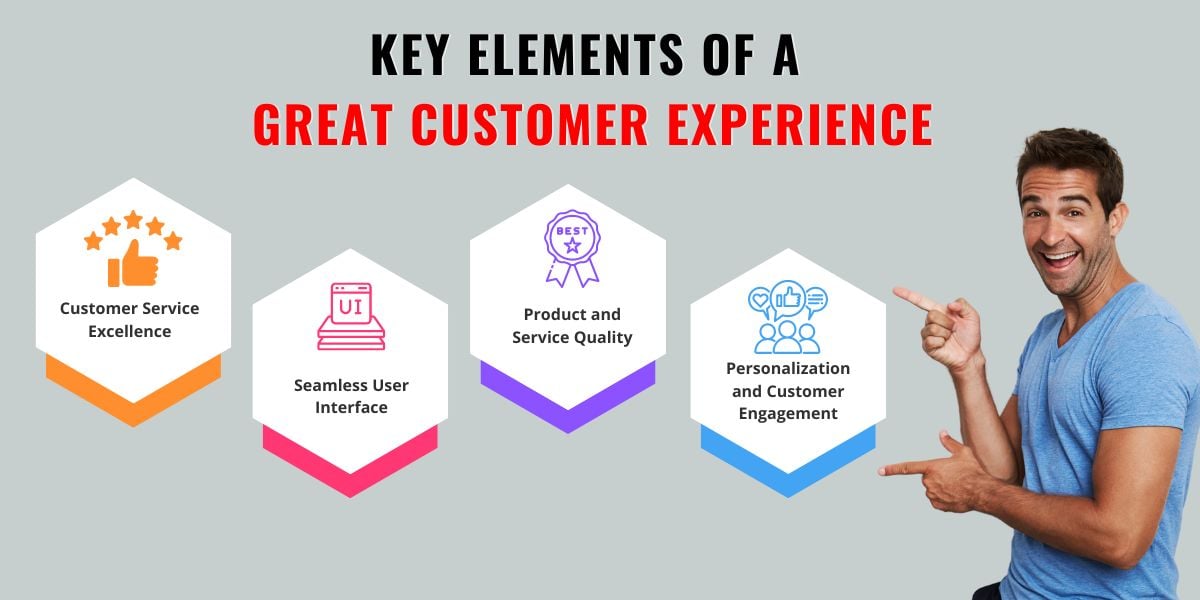
Key Elements of a Great Customer Experience
To deliver an exceptional customer experience, it's essential to pay attention to several key components:
Customer Service Excellence:
Prompt and helpful customer service can turn even a challenging situation into a positive experience.
Practical Tips:
Consider implementing a system that allows customers to easily access support, such as live chat or a 24/7 helpline. Train your customer service team to handle common problems effectively, and encourage them to go the extra mile to make customers feel valued.
Seamless User Interface:
For online businesses, an intuitive and user-friendly interface is crucial. It should be easy for customers to navigate your website or app.
Practical Tips:
Hire a professional web or app designer to ensure that your platform is user-friendly and visually appealing. Conduct usability testing to identify potential issues that users might face, and use this feedback to further improve your digital experience. The key is consistent testing and optimization based on user behavior and feedback.
Product and Service Quality:
Regardless of your industry, the quality of your product or service plays a significant role in shaping customer perceptions.
Practical Tips:
To ensure consistent quality, establish and maintain strict standards and QA processes. Regularly review and update these standards whenever necessary. If you sell products, opt for reliable suppliers with a proven track record. If you provide a service, make sure your team has the skills and resources they need to deliver high-quality results consistently.
Quality is non-negotiable. Regardless of your industry, the quality of your products or services is a critical factor that shapes customer perceptions.
Personalization and Customer Engagement:
Tailoring your offerings to individual customer preferences can make them feel valued and understood.
Practical Tips:
Leverage data you have about your customers' past behaviors to offer personalized experiences. For example, if you have an e-commerce store, show product recommendations based on the customer's browsing or purchase history. Some businesses use AI or machine learning tools to automate personalization. For instance, Netflix uses viewing data to recommend shows and movies to users, creating a personalized experience that keeps them coming back for more.
Measuring Customer Satisfaction
Evaluating customer satisfaction is a crucial aspect of business planning and understanding how well your organization meets customers' needs. A well-designed business planning format should include customer experience as a key performance indicator, as it directly influences brand loyalty and customer loyalty. To gauge customer satisfaction and the effectiveness of your customer experience efforts, you can use various metrics:
Net Promoter Score (NPS):
NPS measures the likelihood of customers recommending your business to others, playing a critical role in determining brand loyalty.
Practical Tip:
Calculate the NPS by conducting short customer surveys, asking respondents to rate how likely they are to recommend your business to a friend or colleague on a scale of 0-10. It is then determined by subtracting the percentage of Detractors (scores 0-6) from the percentage of Promoters (scores 9-10). Regularly track NPS as part of your business planning format to monitor changes in customer loyalty over time.
Customer Satisfaction Score (CSAT):
CSAT captures customer satisfaction levels based on their recent interactions, providing valuable input to your ongoing business planning efforts.
Action Plan:
Conduct CSAT surveys that request customers to rate their satisfaction level with an interaction on a scale, typically from 1 (Very dissatisfied) to 5 (Very satisfied). The CSAT score is expressed as a percentage of satisfied customers (i.e., those who responded with a 4 or 5). Including CSAT measurements in your business planning format helps to identify specific interactions and touchpoints that could benefit from improvement.
Customer Effort Score (CES):
CES evaluates how easy or difficult it is for customers to achieve their goals with your business, shedding light on potential barriers in the customer experience.
Implementation Guide:
Obtain CES by surveying customers after a specific interaction (such as contacting customer support or making a purchase) and asking them to rate their agreement with the statement "The company made it easy for me to handle my issue." Monitoring and addressing CES can help ensure an effortless customer experience, promoting customer loyalty.
Incorporating these metrics into your business planning format and analyzing their respective outcomes, you can more effectively tailor your customer experience strategies, driving both brand loyalty and customer loyalty in the long run.
The Customer Journey
Understanding customer experience requires examining the customer journey, which consists of multiple touchpoints. Each interaction contributes to the overall perception of your brand. For example, a positive interaction with customer support can offset any prior negative experiences.
Personalization and Data
In the age of data-driven business, personalization is key. Understanding customer data allows you to tailor your offerings, marketing messages, and even pricing strategies to match the preferences and needs of your target audience.
Impact on Business Growth
The positive effects of prioritizing customer experience are felt across all industries. Increased customer retention, reduced churn rates, and higher customer lifetime value contribute to sustainable business growth. Happy customers often become brand advocates, attracting new potential customers through word of mouth.

Challenges and Solutions
Delivering a consistently remarkable customer experience can pose many challenges. These challenges typically revolve around meeting evolving customer expectations, integrating customer feedback into your business planning format, and keeping up with advancements from ongoing research and development. However, with the correct approach and strategies, your business can overcome these challenges and deliver a memorable and effective customer journey.
Key challenges include:
Maintaining Consistent Quality Across all Channels:
Given the variety of online and offline channels customers can interact with your brand, ensuring a uniformly high-quality experience can be daunting.
Practical Tip:
To tackle this, focus on creating a seamless omnichannel experience wherein customers can switch between different platforms and still enjoy a consistent quality of service. Brands like Disney excellently manage to do this, providing a consistent experience from digital platforms (website, mobile app) to their physical locations (theme parks, stores).
Keeping up with Customer Expectations:
With rapidly evolving technologies and availability of choice, customers’ expectations are always increasing.
Roadmap:
Continual research and development is the key to ensuring your product or service stays ahead of customer expectations. Ensure that regular market research is part of your business planning format, and incorporate customer feedback into product development. Apple's ongoing commitment to innovation and its ability to anticipate customer needs has ensured it stays at the forefront of the technology industry.
Integration of Advanced Technologies:
Integrating advanced technologies like AI and data analysis for personalized customer experiences can appear complex to businesses.
Action Plan:
Adopt a step-by-step approach to integrate new technologies. It's not necessary to implement everything at once; instead, focus on aspects of your business that will most benefit from technology integration. Some companies use AI chatbots to improve customer service. For instance, online retail giant Amazon uses AI to provide accurate product recommendations based on customers' browsing and purchasing history.
Case Studies
Real-world examples illustrate how businesses can reap immense benefits by putting customer experience at the heart of their operations. These examples should form an essential part of any customer-focused business planning format:
Amazon:
Known for its customer-centred approach, Amazon built its success by continually listening to customer feedback and making the necessary enhancements to its service. As a result, they have been able to set a benchmark in customer experience, especially with features like easy return policies and personalized recommendations that successfully meet customer expectations.
Apple:
Apple stands out in delivering a seamless user experience with its products and services. It's not only the quality of Apple products that wins customer loyalty but also the overall experience, from the intuitive interface of their devices to the outstanding customer service provided in their stores. Foundation of Apple's success lies in their consistent research and development and understanding of customer expectations.
Embrace Customer Experience and Propel Your Business Forward
Understanding customer experience is not a luxury; it's a necessity for any business looking to thrive in today's competitive landscape. By focusing on the components that make up an outstanding customer experience, measuring customer satisfaction, and staying attuned to the needs of your audience, you can pave the way for long-term success.
Remember, customer experience is not a one-time effort; it's an ongoing commitment that can shape the destiny of your business.
With this guide, you now possess the knowledge and tools to improve your customer experience, enhance your customer journey mapping, and boost your business planning efforts.
No matter if you are a new entrepreneur, an experienced business owner, or a startup looking to make a splash in the market, keep these principles in mind as you develop your marketing strategy and build customer loyalty. Let your exceptional customer experience be the driving force propelling your business to new heights.
Discover the Right Tools for Your Startup
Take our 2-minute quiz to find tools tailored to your specific needs and goals.
Take the QuizTakes only 2 minutes


