
Unlocking the Vitality of Business Critical Operations
Explore effective strategies to boost the efficiency of business-critical operations, ensuring long-term growth and operational resilience.

Welcome to an immersive learning experience designed to unlock the true potential of your business! This comprehensive guide delves into the heart to scale business operations, offering a roadmap to optimize four fundamental pillars of your organization's success: supply chain management, customer relationship management, financial management, and risk mitigation.
We'll delve into the impact of effective execution, showcasing how businesses transformed their performance by mastering these critical areas.
Ready to set your business on the path to sustainable growth and profitability? Let's begin by understanding the significance of each operation and how they intertwine to create a winning formula for success!
Understanding the Backbone of Success: Exploring the Significance of Key Operations.
Welcome to your journey towards understanding the backbone of success for any business!
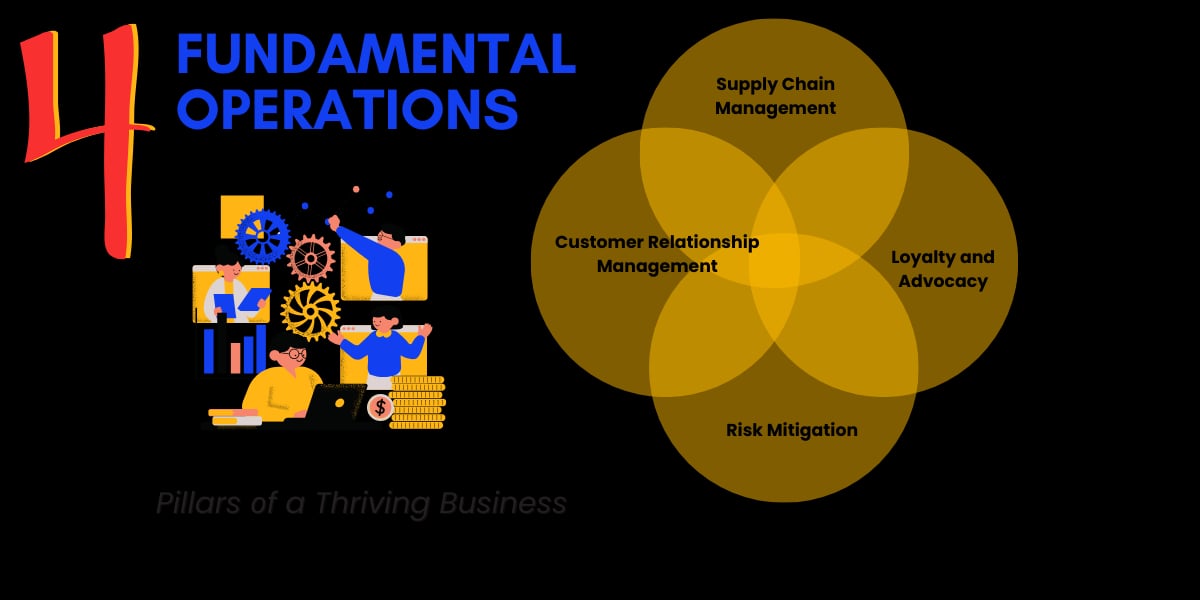
Here, we delve into the four fundamental operations that act as the pillars of a thriving business:
1. Supply Chain Management: The Lifeline of Product Flow
🟥 Understanding Supply Chain Management: In this part, we'll look at how supply chain management helps get raw materials, make products, and deliver them to customers smoothly. We'll talk about important things like how we get materials, keep track of what we have, move things around, and work with suppliers.
🟥 Why It Matters: We'll show how managing the supply chain well can save money, make deliveries faster, and make customers happier. We'll also talk about what happens if things aren't managed well.
🟥 Real-life Examples: We'll share stories about companies that do supply chain management really well. We'll talk about what they do and how it helps them.
2. Customer Relationship Management: Nurturing Loyalty and Satisfaction
Building Enduring Bonds: The Power of Customer Engagement
This section delves into the heart of customer relationship management (CRM), exploring its pivotal role in fostering meaningful customer engagement. We'll unveil how CRM empowers businesses to create lasting connections with their customers through:
🟥Data-Driven Insights: Uncover the secrets hidden within customer data. Learn how CRM tools analyze purchase histories, preferences, and interactions to paint a vivid picture of each customer. This allows businesses to tailor their approach, sending personalized messages, recommending relevant products, and exceeding expectations.
🟥 Personalized Communication: Ditch the one-size-fits-all approach. CRM helps craft targeted communication that resonates with each customer. Imagine sending birthday greetings with special offers, addressing concerns promptly, and proactively reaching out with relevant information. This personalization fosters trust and loyalty.
🟥 Exceptional Customer Service: Elevate every interaction. CRM empowers businesses to track customer issues, provide efficient solutions, and offer proactive support. Imagine exceeding expectations with personalized service, resolving issues seamlessly, and turning every interaction into a positive experience that drives engagement.
3. Loyalty and Advocacy: The Rewards of Engagement
🟥Now, let's explore the sweet rewards of effective customer engagement:
◾ Fostering Loyalty: Engaged customers are loyal customers. They'll return for repeat business, choose your brand over competitors, and actively recommend you to others. This translates to sustainable growth and profitability.
◾ Unleashing Advocacy: Engaged customers become brand advocates. They share positive experiences, leave glowing reviews, and promote your brand organically. This creates trust, attracts new customers, and amplifies your marketing efforts.
🟥The Risks of Neglecting Customer Engagement:
Ignoring customer engagement comes with a hefty price tag:
◾Customer Churn: Disengaged customers become lost customers. They'll seek out competitors who offer a more engaging experience, leading to lost revenue and brand damage.
◾ Negative Sentiment: Unhappy customers become vocal critics. They'll share their negative experiences online and through word-of-mouth, damaging your brand reputation and deterring potential customers.
4. Risk Mitigation: Safeguarding Against Uncertainties
🟥 Being Ready for Challenges: Here, we'll talk about being proactive in handling problems before they happen. We'll look at how important it is to identify risks, figure out how risky they are, and plan for what to do if they happen.
🟥 Getting Stronger for the Long Run: We'll show how dealing with risks well helps businesses stay strong and keep going, even when things get tough. We'll also talk about what happens if businesses don't handle risks properly.
🟥 Risks for Different Industries: This part will talk about the different kinds of risks that businesses face depending on what they do. We'll give specific plans to deal with these risks for each industry.
Executing with Precision: Strategies and Methodologies for Success
Now that we've explored the fundamental pillars of successful businesses, it's time to delve into the execution phase. This chapter unveils proven strategies and methodologies for optimizing each key operation, ensuring your plans translate into tangible results.

✅Supply Chain Management: Streamlining Processes and Logistics
Imagine a seamlessly flowing river delivering essential materials to your production line. Effective supply chain management makes this a reality. Here's how:
- Optimizing Procurement: Implement strategic sourcing to find reliable suppliers offering quality materials at competitive prices. Leverage technology like e-procurement platforms to streamline purchase orders and reduce manual tasks.
- Data-Driven Inventory Management: Utilize forecasting tools to anticipate demand and maintain optimal stock levels. Employ lean inventory practices to minimize waste and storage costs. Explore real-time inventory tracking systems for complete visibility.
- Efficient Logistics: Partner with reliable logistics providers to ensure timely and cost-effective delivery. Implement transportation management systems for optimized routes and efficient fleet management. Consider multimodal transportation for cost savings and flexibility.
✅Customer Relationship Management: Building Strong Connections
Think beyond transactions and cultivate lasting relationships with your customers. Here's how:
- Customer Segmentation: Divide your customer base into distinct groups based on demographics, needs, and preferences. This allows for targeted communication and personalized offers.
- Omnichannel Engagement: Meet your customers where they are, be it on social media, mobile apps, or physical stores. Offer seamless interactions across all channels, providing consistent and personalized support.
- Loyalty Programs: Reward repeat business and incentivize customer engagement with reward programs and special offers. Encourage positive word-of-mouth and brand advocacy.
- Customer Feedback Loop: Actively collect and analyze customer feedback through surveys, reviews, and social media interactions. Use this data to continuously improve your offerings and customer experience.
✅Financial Management: Budgeting, Forecasting, and Analysis
Chart your course to financial stability and growth with sound financial management. Here's how:
- Realistic Budgeting: Create comprehensive budgets that accurately forecast income, expenses, and cash flow. Regularly review and adjust budgets based on changing market conditions.
- Data-Driven Forecasting: Utilize historical data and industry trends to make informed predictions about future revenue and expenses. This helps anticipate potential challenges and seize growth opportunities.
- Financial Analysis: Regularly analyze financial data to identify areas for improvement, evaluate investments, and track progress towards your financial goals. Utilize tools like financial dashboards and key performance indicators (KPIs) for clear insights.
- Cost Optimization: Continuously identify and implement cost-saving measures without compromising quality or service. Explore automation opportunities, renegotiate supplier contracts, and optimize resource allocation.
✅Risk Mitigation: Identifying, Assessing, and Managing Risks
Don't let unforeseen events derail your progress. Be proactive with risk mitigation:
- Comprehensive Risk Identification: Conduct risk assessments to identify potential threats to your business, including operational, financial, and reputational risks.
- Prioritization and Evaluation: Analyze the likelihood and impact of each risk, prioritizing those with the most significant potential consequences.
- Contingency Planning: Develop action plans to address identified risks. These plans should outline specific steps to mitigate or minimize the impact of potential events.
- Regular Review and Updates: Regularly review your risk assessments and contingency plans to ensure they remain relevant and effective. Adapt them based on changing market conditions and emerging threats.
Each operation deserves deeper exploration based on your specific industry, business model, and goals. By combining the strategies outlined here with your unique context, you can execute with precision and achieve sustainable success.
Refining for Optimal Performance: Continuous Improvement in Business Critical Operations
Now, we dive into the crucial aspect of continuous improvement, ensuring your business remains agile and adaptable in a dynamic market.
✅Supply Chain Management: Adapting to Market Dynamics
The market is a living organism, constantly evolving. Here's how to keep your supply chain in sync:
- Real-Time Demand Tracking: Implement demand forecasting systems that adapt to real-time data and market fluctuations. This ensures you have the right inventory at the right time, avoiding stockouts and overstocking.
- Supplier Collaboration: Foster strong partnerships with suppliers. Share market insights and collaborate on joint forecasting and planning. This strengthens your supply chain and improves responsiveness to market shifts.
- Agile Procurement: Move beyond rigid contracts and embrace flexible sourcing strategies. This allows you to adapt to changing supplier availability, price fluctuations, and emerging market opportunities.
- Technological Innovation: Leverage innovative technologies like blockchain for secure and transparent supply chain management. Explore automation and artificial intelligence to optimize logistics and inventory management.
✅Customer Relations Mastery: Enhancing Engagement and Satisfaction
Customer loyalty is not a given; it needs to be nurtured. Here's how to keep your customers engaged and happy:
- Personalized Customer Journeys: Map out individual customer journeys based on preferences and past interactions. This allows for targeted communication, relevant offers, and personalized experiences that drive engagement.
- Omnichannel Feedback: Encourage feedback across all channels, from social media to in-person interactions. Analyze this feedback to identify areas for improvement and personalize future interactions.
- Community Building: Foster a sense of community around your brand. Create loyalty programs, social media groups, and online forums where customers can interact and feel valued.
- Proactive Customer Service: Anticipate customer needs and proactively offer solutions. Utilize chatbots, self-service portals, and predictive analytics to provide immediate and personalized support.
✅Financial Management: Maximizing Efficiency and Profitability
Every penny counts. Here's how to ensure your financial resources are used to their full potential:
- Cost-Benefit Analysis: Evaluate every expenditure through the lens of cost-benefit analysis. Ensure your investments align with your financial goals and generate a positive return.
- Dynamic Budgeting: Move beyond static budgets and embrace rolling forecasts and flexible budgeting. This allows you to adapt to changing market conditions and seize unexpected opportunities.
- Performance Management: Implement key performance indicators (KPIs) to track financial performance across various departments. Use this data to identify areas for improvement and optimize resource allocation.
- Financial Modeling: Develop financial models to simulate different business scenarios and assess the potential impact of various decisions. This helps make informed financial choices and mitigate risks.
✅Risk Mitigation: Proactive Measures and Contingency Planning
Don't wait for risks to materialize. Here's how to be proactive:
Scenario Planning: Conduct scenario planning exercises to analyze potential future events and their impact on your business. This helps you develop contingency plans for different situations.
- Testing Under Pressure: Put your business model and financial plans through stress tests to see how well they can handle tough situations like economic downturns or unexpected challenges.
- Cybersecurity Protection: Make sure your data and systems are safe from cyberattacks by using strong cybersecurity measures. Keep updating your security rules and teach your employees how to stay safe online.
- Crisis Communication: Create a plan for how to talk to your stakeholders and the public if something bad happens. This helps make sure everyone knows what's going on and can respond together.
- Always Getting Better: Remember that improving your business is an ongoing process. Keep checking how well you're doing, change your plans when needed, and use new technology to stay ahead in the changing market.

Practical Examples of Effective Execution: Turning Strategies into Action
Now that we've looked at how to make key operations better, let's see some real examples of businesses that did it well and got great results.
🛑Supply Chain Management: Case Study of Streamlined Logistics
Company: Zalando, a leading European online fashion retailer.
Challenge: Delivering millions of fashion items efficiently and quickly across diverse European markets.
Solution: Zalando implemented a multi-layered logistics network with strategically located warehouses and distribution centers. They leveraged data analytics to anticipate demand and optimize inventory placement. Additionally, they partnered with innovative last-mile delivery providers for faster and more flexible deliveries.
Result: Zalando achieved significant reductions in delivery times and costs, while maintaining high levels of inventory availability. This contributed to their rapid growth and market dominance.
🛑Customer Relationship Management: Building Brand Loyalty
- Company: Sephora, a global cosmetics retailer.
- Challenge: Building deeper relationships with customers beyond transactional purchases.
- Solution: Sephora launched Beauty Insider, a loyalty program offering rewards, personalized recommendations, and exclusive events. They also leveraged social media to connect with customers, offering beauty tips and engaging in two-way conversations.
- Result: Sephora boasts an extremely loyal customer base with high repeat purchase rates. The Beauty Insider program has millions of members, generating a significant portion of Sephora's revenue.
🛑Financial Management: Achieving Fiscal Fitness
- Company: Netflix, the streaming entertainment giant.
- Challenge: Managing rapid growth while maintaining profitability in a competitive market.
- Solution: Netflix implemented data-driven budgeting and forecasting to optimize content investments and marketing campaigns. They also transitioned to a cloud-based infrastructure to reduce operational costs. Furthermore, they adopted dynamic pricing models based on customer data and market trends.
- Result: Netflix achieved significant cost savings and increased profitability, allowing them to invest in original content and maintain their market leadership.
🛑Risk Mitigation: Successful Crisis Management
- Company: Johnson & Johnson, a global healthcare company.
- Challenge: Responding effectively to a product recall due to safety concerns.
- Solution: Johnson & Johnson established a dedicated crisis management team and communicated transparently with customers and regulators. They also implemented corrective actions quickly and offered customer support.
- Result: Johnson & Johnson mitigated reputational damage and maintained customer trust despite the crisis. The company's swift and transparent response was widely praised.
These examples showcase how effective execution of key strategies can lead to tangible business success. Remember, successful execution requires:
- Clear goals and objectives.
- Data-driven decision making.
- Collaboration across different departments.
- Continuous improvement and adaptation.
Business Critical Operations Mastery: Way to Success
🎯Embrace excellence, unlock potential. This guide empowers you to master four critical operations: supply chain, customer relations, finances, and risk management.
🎯Execute with precision, adapt with agility. Learn from real-world examples, refine your strategies, and leverage data for continuous improvement.
🎯Focus on impact, prioritize investments. Tools like the BCG Matrix guide your choices, ensuring maximum impact for your business.
🎯Dare to dream, dare to execute. Seize opportunities, innovate, and let your business thrive.
Your journey begins now. Master operations, achieve success.
Tagline: Mastering Business Operations: Where Strategy Meets Success.
"Success is not about the destination, it's about the journey." - Unknown
Discover the Right Tools for Your Startup
Take our 2-minute quiz to find tools tailored to your specific needs and goals.
Take the QuizTakes only 2 minutes


