
The Power of Sales Funnels:Guide for Entrepreneurs
Discover ways technology is reshaping sales funnels for entrepreneurs - from AI, chatbots to voice optimization.

In today's competitive business landscape, entrepreneurs across industries are constantly seeking effective strategies to drive conversions and maximize revenue. Enter sales funnels – systematic processes designed to guide potential customers along a journey from initial awareness to final purchase. In this comprehensive guide, we will explore the concept of sales funnels, their relevance for entrepreneurs, and practical strategies for creating successful sales funnels.
Understanding the Sales Funnel Concept: Nurturing Customers towards Conversion
The sales funnel, often referred to as the purchase funnel, serves as a graphical representation of a customer's journey from initial awareness to conversion. It provides a valuable framework for businesses to understand the buyer's psychological process and tailor their marketing efforts accordingly. This fosters a nurturing environment that guides leads through the various stages of the buying cycle, ultimately leading to increased conversions and sales.
Key Stages of the Sales Funnel: Guiding Customers through the Journey
🔹 Awareness:
At the top of the funnel, potential customers are unaware of your brand or its offerings. Marketing efforts focus on generating awareness through various channels like social media, content marketing, and search engine optimization. The goal is to capture attention and pique their interest in your product or service.
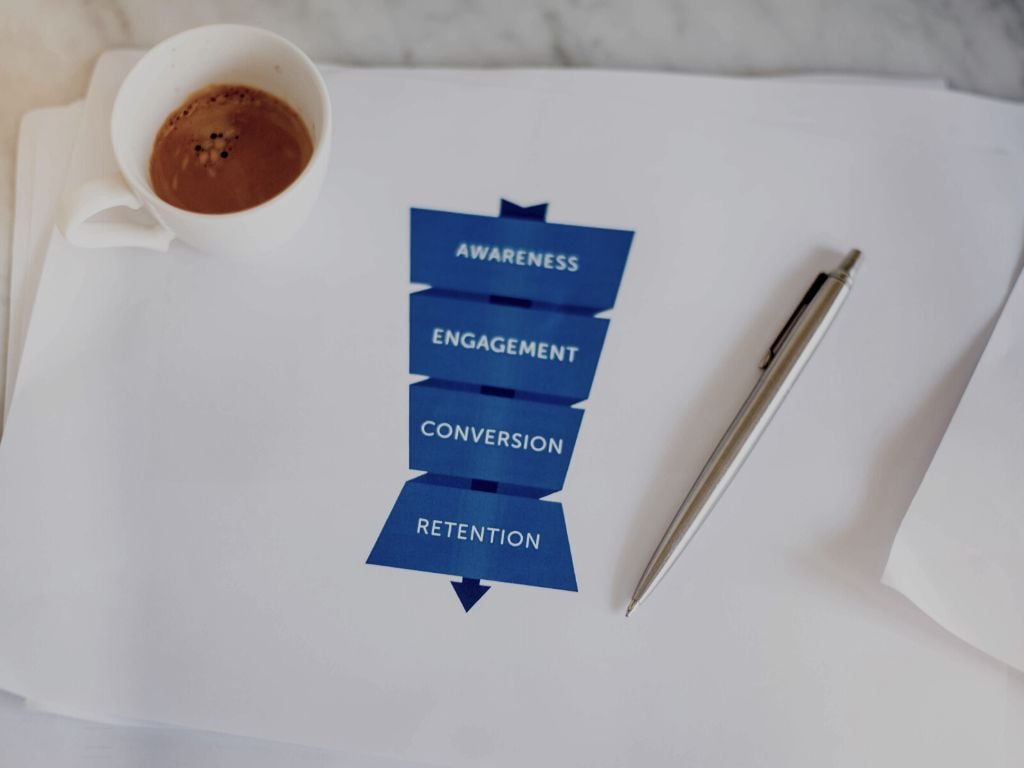
◾ Goal: Capture attention and introduce your brand and offerings.
◾ Strategies:
- Content marketing: Create valuable and informative content like blog posts, infographics, and videos that address your target audience's pain points and interests.
- Social media marketing: Leverage social media platforms to engage with potential customers, share valuable content, and run targeted ads.
- Search engine optimization (SEO): Optimize your website and content to rank higher in search engine results pages (SERPs) for relevant keywords.
- Public relations: Generate positive media coverage and build brand awareness through press releases, partnerships, and influencer marketing.
🔹 Consideration:
Once aware, potential customers move to the consideration stage where they gather information and evaluate different options.
Providing valuable content like blog posts, case studies, and white papers helps establish expertise and build trust.
Offer free trials, demos, or consultations to allow potential customers to experience your product firsthand.
◾ Goal: Build trust and establish your product/service as the best solution.
◾ Strategies:
- Offer free resources: Provide free trials, demos, consultations, webinars, ebooks, and white papers to showcase the value of your offering.
- Case studies and testimonials: Showcase success stories from satisfied customers to build trust and demonstrate the effectiveness of your product/service.
- Product comparisons: Highlight the unique benefits and features of your offering compared to competitors.
- Email marketing: Build relationships with leads through informative and personalized email campaigns.
🔹 Decision:
Customers have narrowed down their choices and are ready to make a decision.
Address their specific needs and concerns through personalized communication and targeted offers.
Highlight the benefits and value proposition of your product to convince them it's the best solution.
◾ Goal: Overcome objections and encourage customers to make a purchase.
◾ Strategies:
- Address objections: Proactively anticipate and address potential customer concerns.
- Limited-time offers: Create a sense of urgency and incentivize immediate action with discounts, limited-time deals, or exclusive bonuses.
- Live chat and sales support: Provide real-time assistance to address customer questions and concerns.
- Clear call to action (CTA): Make it easy for customers to take the next step with a clear and compelling CTA.
🔹 Conversion: This stage marks the successful transformation of a lead into a paying customer.
Make the purchasing process simple and seamless. Offer incentives and discounts to encourage conversion.
◾ Goal: Finalize the purchase and convert the prospect into a customer.
◾ Strategies:
- Streamline the checkout process: Ensure a smooth and user-friendly purchasing experience with a clear and concise checkout process.
- Offer multiple payment options: Provide flexibility and convenience for customers by offering various payment methods.
- Security and trust: Ensure a secure and trustworthy checkout experience with SSL certificates and clear security seals.
- Order confirmation and communication: Send timely order confirmations and updates to keep customers informed and engaged.
🔹 Retention: Post-purchase, retaining customers is crucial for long-term success.
Provide excellent customer service and ongoing support.
Offer loyalty programs and exclusive benefits to incentivize repeat purchases.
◾ Goal: Foster long-term relationships and turn customers into advocates.
◾ Strategies:
- Provide excellent customer service: Offer prompt, responsive, and helpful customer service to build positive relationships.
- Loyalty programs: Reward repeat customers with exclusive benefits like discounts, points, and early access to new products.
- Personalized product recommendations: Recommend products or services based on individual customer preferences and purchase history.
- Gather feedback and iterate: Continuously seek feedback from customers to improve your offerings and enhance their experience.
Nurturing Customers through the Funnel
Personalization: Tailor your communication and offers to each customer's needs and interests.
Example:A clothing retailer sends personalized emails to customers based on their browsing and purchase history, offering recommendations and discounts on items they are most likely to be interested in.
Content marketing: Create valuable content that addresses their pain points and informs their decision-making process.
Example: An e-commerce store uses marketing automation software to send personalized follow-up emails to customers who abandoned their shopping carts, offering a discount or free shipping to incentivize them to complete their purchase.
Automation: Utilize tools and technology to automate repetitive tasks and personalize your outreach.
Example: A software company creates a blog post that addresses common challenges faced by their target audience, providing solutions and tips that help them make informed decisions about their software needs.
Relationship building: Foster genuine connections with potential customers through meaningful interactions.
Example: A financial advisor regularly meets with their clients to discuss their financial goals, updates on investments, and provides personalized advice to help them achieve their objectives.
Data-driven insights: Analyze customer data to understand their behavior and optimize your funnel for better results.
Example: An online retailer analyzes customer data and discovers that a specific web page is causing a high bounce rate. They make changes to the page layout and content based on this insight, resulting in increased engagement and conversions.
Benefits of Implementing a Sales Funnel
Improved lead conversion rates: By nurturing leads through each stage, you increase the likelihood of converting them into paying customers.
✔️ Enhanced customer experience: A well-designed funnel ensures a smooth and positive journey for your customers, leading to greater satisfaction and loyalty.
✔️ Increased brand awareness: Consistent marketing efforts across the funnel stages effectively reach out to potential customers and build brand recognition.
✔️ Data-driven decision making: Analyzing funnel data provides valuable insights into customer behavior and preferences, enabling you to make informed marketing and sales decisions.
The sales funnel concept offers a powerful tool for understanding and optimizing the customer journey. By adopting a customer-centric approach and implementing effective nurturing strategies, businesses can drive conversions, build lasting relationships, and achieve sustainable success.
Importance of Sales Funnels for Entrepreneurs: Maximizing Conversions and Revenue
Sales funnels play a crucial role in the success of entrepreneurs, helping them maximize conversions and revenue. In today's competitive business landscape, having a well-designed sales funnel is more important than ever. It allows entrepreneurs to guide potential customers through the buying journey, ultimately increasing their chances of making a sale and boosting profitability. Let's explore the importance of sales funnels and how they can benefit entrepreneurs.
First and foremost, sales funnels provide entrepreneurs with a systematic and strategic approach to lead nurturing. Instead of randomly reaching out to potential customers and hoping for a sale, a sales funnel allows entrepreneurs to map out each stage of the customer journey.
By understanding the needs, pain points, and desires of their target audience, entrepreneurs can tailor their messaging and offerings to meet those specific needs at every stage. This personalized approach builds trust, establishes credibility, and increases the likelihood of conversion.
Strategies for Building a Successful Sales Funnel: Putting Theory into Action
Creating an effective sales funnel requires a combination of proven strategies and best practices. Provide entrepreneurs with practical tips and insights on how to build successful sales funnels. Topics covered will include captivating landing pages, persuasive copywriting, audience segmentation, automated email sequences, and lead nurturing.
Entrepreneurs can significantly increase their chances of building successful sales funnels that drive conversions and achieve their business goals by:
Crafting captivating landing pages: Make sure each landing page has a clear and specific goal, highlight the benefits and value proposition of your offering, and optimize it for conversion using strong visuals, compelling CTAs, and a streamlined design.
Using persuasive copywriting: Write clear and concise language, focus on pain points and solutions, and create a sense of urgency to encourage readers to take action.
Implementing audience segmentation and personalized communication: Divide your audience into different groups based on shared characteristics, tailor your messaging to resonate with each segment, and leverage automation tools to personalize content and communication based on individual preferences.
Developing targeted email sequences and lead nurturing strategies: Create automated email sequences that guide leads through the sales funnel, provide valuable content at each stage of the buyer's journey, personalize communication using dynamic content and segmentation, and track engagement to optimize your email sequences.
Conquering Common Sales Funnel Challenges: Proven Strategies for Success
Implementing sales funnels is a powerful growth strategy, but it's not without its challenges. This section equips entrepreneurs with the knowledge and tools to overcome common roadblocks and achieve optimal results.
Challenge 1: Low Conversion Rates
Solution:
Deeply analyze data: Identify bottlenecks where leads drop off using analytics tools.
Optimize your funnel: Refine landing pages, CTAs, and email sequences for clarity and persuasiveness.
Target the right audience: Ensure your marketing efforts reach the ideal customer profile.
Personalize the experience: Tailor messaging and content to individual preferences and needs.
Challenge 2: Managing Customer Objections
Solution:
Anticipate objections: Proactively identify potential concerns and address them proactively.
Provide clear value propositions: Communicate the benefits of your product or service clearly and concisely.
Offer social proof: Showcase testimonials, case studies, and positive reviews to build trust.
Engage in empathetic dialogue: Actively listen to customer concerns and address them with patience and understanding.
Challenge 3: Generating Qualified Leads
Solution:
Target the right audience: Invest in market research and buyer persona development to identify your ideal customer profile.
Craft compelling content: Develop valuable content that resonates with your target audience and addresses their pain points.
Utilize lead generation tools: Implement SEO, social media marketing, and paid advertising strategies to attract qualified leads.
Optimize your website: Ensure your website is user-friendly and optimized for conversions.
Challenge 4: Tracking and Analyzing Data
Solution:
Choose the right tools: Invest in comprehensive analytics platforms to track key metrics and visualize data effectively.
Set clear goals: Define specific goals and KPIs to track progress and measure the effectiveness of your efforts.
Regularly review data: Analyze data regularly to identify trends, areas for improvement, and opportunities for optimization.
Integrate data across platforms: Ensure data from different sources is integrated for a holistic view of your sales funnel performance.
Challenge 5: Maintaining Budget and Resources
Solution:
Prioritize tasks: Focus your resources on the most critical aspects of your sales funnel that have the greatest impact on conversions.
Utilize automation tools: Leverage automation tools to streamline tasks and free up resources for other activities.
Seek partnerships: Explore collaborations with other businesses to share resources and expertise.
Measure and evaluate: Regularly track the ROI of your funnel activities to ensure efficient resource allocation.
Future Trends and Innovations in Sales Funnels: Embracing the Power of Technology.
As we strive to understand the evolving landscape of digital marketing and e-commerce, sales funnels continue to be a key component in successful online businesses. By capitalizing on the advancements in technology, companies can enhance their sales funnels to become more effective, personalized, and efficient.
The future of sales funnels is set against a backdrop of continuously evolving technology.

By harnessing the power of AI and Machine Learning, utilizing chatbots, optimizing for voice search, integrating video marketing, and embracing data-driven decision making, businesses can look forward to more refined, personalized, and successful sales funnels. To stay ahead of the curve, companies must remain adaptable, embracing these technological innovations as they come.
Taking Action and Expanding Business Opportunities
Building and perfecting sales funnels is a key move for those business-minded folks looking for steady growth and more successful sales. With all the tips, tricks, and info in this detailed guide, entrepreneurs will have the know-how to start building successful sales funnels, helping their businesses to reach new levels.
Always keep learning, open yourself to changes, and let actual data guide your decision-making to go with the flow of the always-changing business world. This will help ensure your journey as a business person is filled with ongoing growth and success.
Discover the Right Tools for Your Startup
Take our 2-minute quiz to find tools tailored to your specific needs and goals.
Take the QuizTakes only 2 minutes


