
What Makes a Good Customer Experience: Key Principles
Explore the key principles shaping a good customer experience. Discover how elements such as consistency, personalization, and quality products feed into defining a remarkable customer journey.

In today's hyper-competitive business landscape, entrepreneurs and new business owners face immense challenges in standing out and ensuring their venture's long-term success. One crucial aspect that can set you apart and foster lasting relationships with your customers is providing a good customer experience.
In this comprehensive guide, we will delve into the principles and strategies that make a good customer experience, emphasizing their importance for entrepreneurs and those launching new businesses.
Understanding the Role of a Good Customer Experience
A good customer experience is when customers feel satisfied and happy with their interactions with a company. It's not just about the product or service itself, but also about how the company treats its customers throughout the entire process.
One key element of creating a good customer experience is building strong customer relationships. This means taking the time to listen to your customers, understand their needs and preferences, and tailor your offerings to meet those needs. By doing so, you show your customers that you value them and are committed to providing the best possible experience.
Another important aspect of a good customer experience is having a well-thought-out marketing strategy. This involves understanding your target audience, knowing where and how to reach them, and crafting compelling messages that resonate with them. By effectively marketing your products or services, you can attract the right customers and create a positive experience from the start.

It's important to remember that a good customer experience doesn't end at the point of purchase. Providing excellent post-purchase support is crucial in maintaining customer satisfaction and building long-term relationships. By addressing any issues or concerns promptly and efficiently, you demonstrate your commitment to your customers' happiness even after they've made a purchase.
A good customer experience is vital for any business. It involves building strong customer relationships, implementing an effective marketing strategy, and providing excellent post-purchase support. By prioritizing these elements and focusing on creating exceptional customer experiences, entrepreneurs and new business owners can set themselves up for success and earn the loyalty of their customers.
Unravelling The Key Elements of a Good Customer Experience
Setting the stage for the principles and strategies of good customer experience must begin with a solid comprehension of its integral elements. Here's a more in-depth look at them:
✔️ Consistency:
Customers have a penchant for predictability. It reassures them. It forms a strong foundation of trust in the context of product quality, service delivery, and even brand messaging.
Rely on a robust business planning format to champion consistency. The layout of your actions will be reflected in your business endeavours, fortifying your brand's reliability. Moreover, it's not just the product or service that must be constant but the user experience. From the beginning to the end of the customer journey, ensure each interaction is echoed with identical intensity and dedication.
✔️ Personalization:
A personalized approach is a sure-fire way to make customers feel cherished. Tailoring your offerings to align with the direct needs and preferences of your audience is highly effective.
Delight your audience with tailor-made solutions and products. Use data analytics and customer feedback to understand your clients and shape your offerings. There's no room for 'one-size-fits-all' in an era where personalization dominates.
✔️ Efficiency:
Time is one of the most significant resources for your customers. Recognizing this fundamental aspect and mirroring it in your operations through streamlined processes and quick response times will earn their respect.
Efficiency often translates into how speedily and effectively you can address your customer's needs. Use technology to minimize response times, automate routine processes, and ensure that the customer journey is as smooth as can be.
✔️ Effective Communication:
Transparent, clear, and responsive communication stands tall as the bedrock to building customer trust. Swiftly resolving issues and proactive interaction nurture solid relationships.
Effective communication isn't confined to resolving product or service issues. It incorporates all elements of customer interaction, be it educating customers about your offerings, updating them regarding their order status, or alerting them to changes in your policies.
✔️ Empathy:
Empathy isn't just an emotion--it's a tool. By understanding and empathizing with your customers' concerns and problems, you unravel avenues for positive relationship-building.
Empathy requires an in-depth understanding of your customers. By placing yourself in their shoes, you perceive their needs, desires, and pain points more accurately. This fuels meaningful, impactful interactions that customers will remember and appreciate.
Principles that Nurture a Good Customer Experience
Understanding the key elements is just one side of the coin; implementing effective principles and strategies that optimise these elements stands as equally significant:
🔶 Customer-Centric Approach: Anchoring your operations, decisions, and strategies around your customers is crucial. Comprehending their needs, expectations, and pain points is key.
A business model centred around the customer paves the way for effective personalization and empathy. Use market research and customer feedback to continuously reshape your approach around shifting customer expectations.
🔶 Quality Products and Services: In the heart of every successful customer experience lies a product or service of top-notch quality. Meeting or exceeding customer expectations consistently goes a long way.
Quality extends far beyond the product—it encompasses the entire customer journey. Adopt measures to protect the intellectual property of your products/services, and keep an equitable value-for-money proposition in every offering.
🔶 Effective Business Planning: A solid business plan acts as a compass for your operational framework. It's a pillar that helps identify your target customers and sets the roadmap for fruitful outcomes.
Factor in a comprehensive section on market analysis, competitive analysis, and strategies for customer acquisition and retention into your business planning format. This elaborate plan will serve as a guide to steer your business practices, keeping your focus squarely on the customer.
🔶 Continuous Improvement: Celebrate a culture of continuous betterment. Regular evaluation of your processes, capturing customer feedback, and remaining agile to match customer needs and market dynamism is vital.
The evolving landscape of consumer behaviour and market trends necessitates consistent improvement. Be open to innovation, and stay flexible to change your strategies based on what the moment demands.
🔶 Employee Training and Engagement: Your team is instrumental in delivering a memorable customer experience. Investing in their skill development and tending to their job satisfaction is paramount.
Well-trained and engaged employees are likely champions of better customer relationship management. Fostering a work environment that motivates employees to contribute their best helps ensure they provide superior customer service.
Strategies for Creating a Good Customer Experience
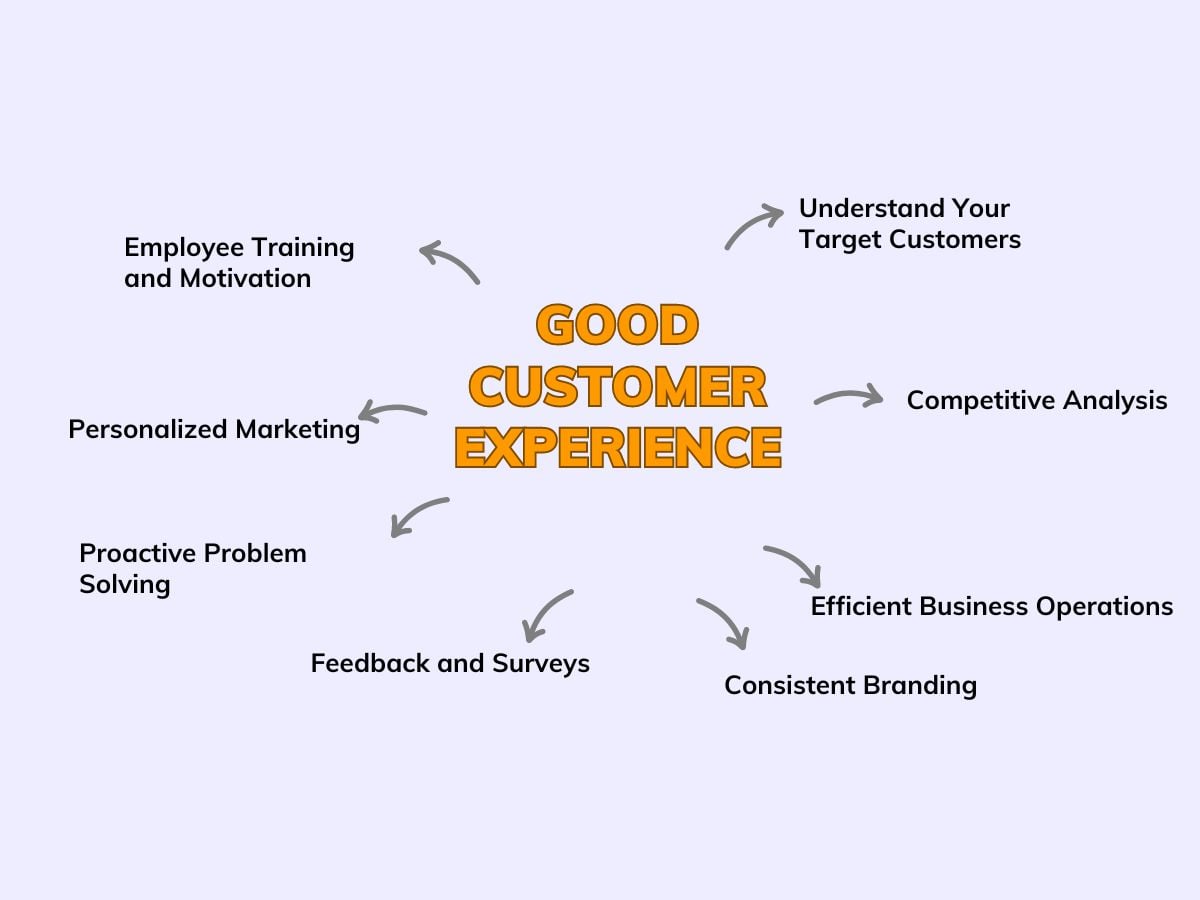
Now that we've outlined the principles, let's delve into actionable strategies to implement them effectively:
🔹 Understand Your Target Customers: Conduct thorough market research to identify your target audience. Understand their demographics, preferences, and pain points. This information will help you tailor your products or services to their needs.
🔹 Competitive Analysis: Analyze your competitors to identify gaps in the market and opportunities for differentiation. Knowing your competitors' strengths and weaknesses allows you to position your business effectively.
🔹 Customer Relationship Management (CRM): Implement a robust CRM system to track customer interactions, preferences, and feedback. This data can help you personalize your offerings and communication.
🔹 Efficient Business Operations: Streamline your business processes to ensure efficiency and quick response times. This can include optimizing your supply chain, automating routine tasks, and improving customer support channels.
🔹 Consistent Branding: Maintain consistent branding across all customer touchpoints, from your website and social media profiles to packaging and in-store experiences. This builds trust and recognition.
🔹 Feedback and Surveys: Regularly gather feedback from your customers through surveys and reviews. Use this feedback to make improvements and show customers that their opinions matter.
🔹 Proactive Problem Solving: Anticipate customer issues and proactively address them. This can prevent problems from escalating and demonstrates your commitment to customer satisfaction.
🔹 Personalized Marketing: Use data and insights from your CRM system to personalize your marketing efforts. Tailor your messages and offers to individual customer preferences.
🔹 Employee Training and Motivation: Invest in training your employees in customer service skills. Ensure they are motivated and aligned with your customer-centric approach.
Forging Ahead with Customer Focus: The Pathway to Success
Now that we've delved into the principles and strategies for creating a good customer experience, let's emphasize why this facet is critical for both budding entrepreneurs and veteran business owners. We'll also provide a short how-to guide related to each section along with the integration of the secondary keywords listed:
Competitive Advantage: In a saturated market, providing an exceptional customer experience can be a substantial competitive advantage. It sets you apart from counterparts who may focus only on price or product features.
👉Implement thorough business planning formats that highlight the unique ways your business can provide high-quality customer experiences. Map out customer-journey touchpoints and identify opportunities for improvement.
Customer Loyalty and Retention: A good customer experience cultivates customer loyalty, leading to repeat business and long-term relationships. Loyal customers are more likely to recommend your business.
👉Nurture customer relationships by actively seeking feedback, responding promptly to concerns, and rewarding customer loyalty with exclusive offers or benefits.
Positive Word of Mouth: Satisfied customers morph into brand advocates. They share their positive experiences, expanding your customer base through referrals.
👉Develop a marketing strategy that encourages and rewards word-of-mouth referrals, such as discounts for referring friends or a loyalty program.
Reduced Marketing Costs: Loyal customers cost less to retain compared to acquiring new ones. A strong customer base reduces your marketing spend while increasing revenue.
👉Create personalized, value-driven experiences for your existing customers, emphasizing customer focus over simple acquisition. High-quality customer service is mission-critical here.
Resilience in Tough Times: During economic downturns or challenging periods, businesses with a loyal customer base tend to be more resilient. Customers who highly value their experience are less likely to jump ship.
👉Regularly communicate and build trust with your customers. Flexible, empathetic, and prompt responses to customer concerns during difficult periods can create and strengthen loyalty.
Enhanced Reputation: A consistent record of excellent customer experiences enhances your brand's reputation, potentially leading to partnerships, collaborations, and positive media coverage.
👉Prioritize research and development to continuously improve your product or service offering, ensuring it meets and exceeds customers' expectations.
Keep in mind, attracting potential customers and converting them into loyal ones stems from consistently delivering a remarkable customer experience, thereby shaping the backbone of a prosperous business venture.
From Principles to Profit - Master the Art of Customer Experience
In the world of business, where competition is fierce and customer expectations are continually evolving, creating a good customer experience is not just a nice-to-have; it's a must-have for customer acquisition and retention. It's the invisible thread that weaves together happy customers, strong customer value propositions, and ultimately, a thriving business.
By understanding the key elements, principles, and strategies discussed in this article, entrepreneurs and new business owners can build a strong foundation for success. We've explored how a customer-centric approach, effective business planning, and a commitment to continuous improvement are the cornerstones of exceptional customer experiences.
But creating a good customer experience isn't a one-time project; it's an ongoing journey of understanding potential customers, exceeding their expectations, and adapting to a dynamic market. This means integrating customer insights into your marketing strategy, constantly refining your processes, and utilizing technology to personalize touchpoints and deliver exceptional service.
Remember, prioritizing your customers and consistently delivering value will not only set you apart in your industry, but also pave the way for long-term growth and profitability. So, embrace the principles of customer experience, implement them strategically in your business planning format, and watch your venture blossom into a haven for happy customers and sustainable success.
Remember, a good customer experience is your hidden weapon in the marketplace. Wield it wisely, and your business will conquer hearts and reap the rewards.
This revised conclusion expands on the original message, integrates additional keywords, and emphasizes the long-term benefits of investing in customer experience. Feel free to further customize it based on your specific needs and target audience.
Discover the Right Tools for Your Startup
Take our 2-minute quiz to find tools tailored to your specific needs and goals.
Take the QuizTakes only 2 minutes


